

Three million pages from the Justice Department’s files on the late sex offender Jeffrey Epstein are being made public, Deputy Attorney General Todd Blanche said at a press briefing Friday.
Blanche said the tranche, which follows the passage of the Epstein Files Transparency Act (EFTA), would include 2,000 videos and 180,000 images related to the Epstein case.
Blanche said in total there were 6 million pages of Epstein documents in the DOJ’s files, but not all documents were being made public in the current release. The DOJ said nearly 3 million pages were being withheld for various reasons including the presence of child sexual abuse material and the obligation to protect victims’ rights. Another 200,000 pages were withheld over legal privileges.
«Today’s release marks the end of a very comprehensive document review process to ensure transparency to the American people,» Blanche said.
Under the EFTA, all of the Epstein files in the government’s possession were required to be released with some exceptions.
Blanche said several categories of pages were withheld from the release due to their sensitive nature. These items include personally identifying information of the victims, victims’ medical files, images depicting child pornography, information related to ongoing cases, and any images depicting death or abuse.
Survivors’ names
Attorneys for hundreds of Epstein survivors told ABC News that names and identifying information of numerous victims appear unredacted in this latest disclosure, including several women whose names have never before been publicly associated with the case.
«We are getting constant calls for victims because their names, despite them never coming forward, being completely unknown to the public, have all just been released for public consumption,» attorney Brad Edwards, who has represented Epstein victims for more than 20 years, said in a telephone interview with ABC News.»It’s literally thousands of mistakes.»
ABC News has independently confirmed numerous instances of victims’ names appearing in documents included in the latest release.
Shortly after the new material appeared on Friday morning, Edwards said he and his law partner, Brittany Henderson, began receiving calls from clients.
«We contacted DOJ immediately, who has asked us to flag each of the documents where victim names appear unredacted, and they will pull them down,» Edwards said. «It’s an impossible job. The easy job would be for the DOJ to type in all the victims’ names, hit redact like they promised to do, then release them. «
«They’re trying to fix it, but I said, ‘The solution is take the thing down for now,'» Edwards said. «There’s no other remedy to this. It just runs the risk of causing so much more harm unless they take it down first, then fix the problem and put it back up.
«This latest release of Jeffrey Epstein files is being sold as transparency, but what it actually does is expose survivors,» said a statement released by 20 Epstein survivors. «As survivors, we should never be the ones named, scrutinized, and retraumatized while Epstein’s enablers continue to benefit from secrecy. This is a betrayal of the very people this process is supposed to serve.»
In a statement, the DOJ said, «The Department coordinated closely with victims and their lawyers to ensure that the production of documents includes necessary redactions. We want to immediately correct any redaction errors that our team may have made; so, the Department has established an email inbox ([email protected]) for victims to reach us directly to correct redaction concerns when appropriate.»
DOJ ‘didn’t protect’ Trump
President Donald Trump’s name appears thousands of times in the documents that have been released to date; at times he is directly mentioned by Epstein, though a significant majority seem to be mentions of Trump in news articles.
Blanche pushed back on the notion that the Justice Department might have protected Trump from his name appearing in the files.
«We comply with the act, and there is no ‘protect President Trump.’ We didn’t protect or not protect anybody,» Blanche said when questioned by ABC News Chief Justice Correspondent Pierre Thomas. «I mean, I think that there’s a hunger or a thirst for information that I do not think will be satisfied by the review of these documents. And there’s nothing I can do about that.»
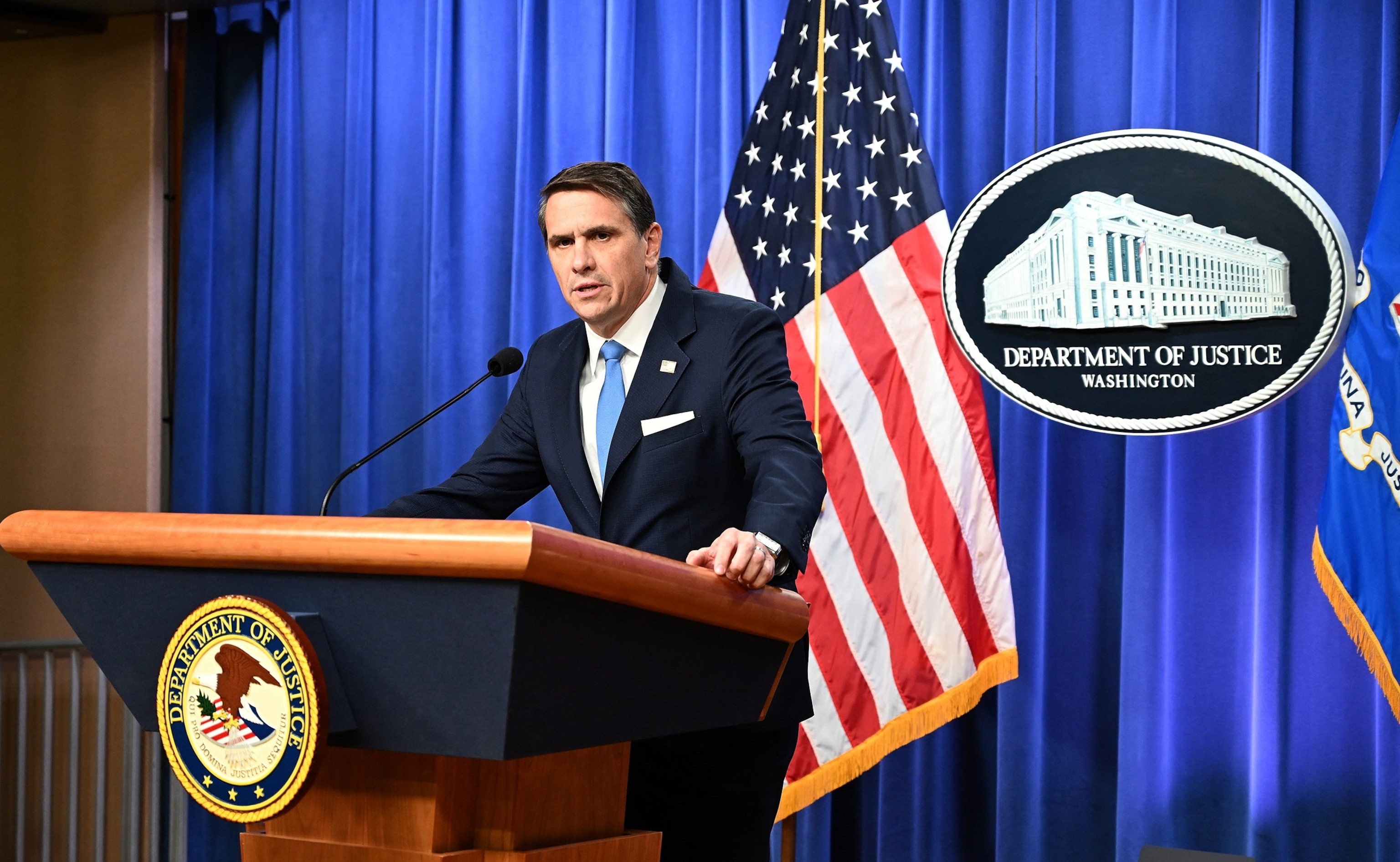
Deputy Attorney General Todd Blanche speaks during a press conference at the US Department of justice, January 30, 2026 in Washington.
Alex Wroblewski/AFP via Getty Images
Blanche said there was «no oversight» by the White House about what the material showed.
He added that if there was evidence in the files that others had abused victims, the DOJ would pursue charges against them.
FBI interview records
Friday’s release contains includes numerous FBI interview records, known as 302s, from allegedvictims of Epstein, which include some detailed statements provided by witnesses to authorities regarding their time with Epstein and his convicted co-conspirator Ghislaine Maxwell from 2013 to 2021.
While the general nature of the allegations has been previously known, the FBI records include details thatallegedvictims provided about the organized operation that used private planes and various residences to facilitate the sexual exploitation of minors and young women.
In the statements, the alleged victimstold authorities that Maxwell served as a primary recruiter who brought women into Epstein’s circle under the guise of professional massages or dance sessions. According to some of the documents, witnesses described a system where Maxwell and Epstein arranged domestic and international travel, provided logistical support for passports, and used modeling fronts to recruit foreign nationals. The records also contain statements that Epstein maintained extensive surveillance systems and used gifts, money, and drug access to maintain a controlled environment for himself and his associates.
Some of the FBI documents mention well-known men including current Commerce Secretary Howard Lutnick and the former Prince Andrew. One witness, whose account appears to be that of Virginia Giuffre,told investigators in 2013 that Maxwell and Epstein arranged for her to travel to London, where Maxwell took her shopping for a dress for a meeting with the prince. She stated she danced with Prince Andrew at a nightclub and alleged she later engaged in sexual activity with him at Maxwell’s residence. She also reported encountering the prince at Epstein’s Manhattan home and on his private island. The former prince has always denied wrongdoing.
Additional records detail interactions with Trump. An individual identified as «III» told the FBI in 2021 that Maxwell presented an alleged victim to Trump at a party in New York, providing a summary of her accolades like a professional CV. According to the FBI document, the victim was later given a tour of Trump’s Mar-a-Lago estate by Trump with Epstein and Maxwell present, though the witness clarified that nothing happened between the victim and Trump.
In one 302, an allegedvictim told authorities in 2021 she was approached outside a New York dance studio at age 17. She stated that after being invited to provide dance-based fitness sessions, the encounters transitioned into massages and then sexual encounters that continued for several years.
She stated that Epstein paid her and attempted to direct her career while encouraging her to introduce her friends to him.
Other FBI 302s identify Jean-Luc Brunel, a French modeling agent and close associate of Epstein who died in 2022, as an intermediary who allegedly recruited young girls through modeling fronts for Epstein and his associates.
The documents include descriptions of the fear and intimidation alleged victims felt after leaving their involvement with Epstein and Maxwell. One FBI report details how Maxwell was described by a witness as a dangerous figure who directed victims’ clothing and social interactions to suit high-profile men. After leaving, some survivors told investigators they were contacted by individuals claiming to represent Epstein’s interests who pressured them not to cooperate with the federal investigation.
Internal FBI documents
One document in Friday’s release is a chart showing connections between Epstein and various employees and associates. Many are redacted — but the faces of several remain visible, including Maxwell, Brunel, and Epstein’s lawyer, accountant, and assistant. The chart is followed by a list of individuals broken into three categories: Day of Arrest, Week of Arrest, and Weeks following arrest.
This ties in with internal DOJ communications released earlier that showed a plan to contact potential witnesses following Epstein’s arrest. There are eight persons who are listed in the accompanying spreadsheet as «suspected co-conspirators,» including Maxwell, Brunel, and Epstein’s assistant Leslie Groff. Two of those designated as «suspected co-conspirators» are also identified also as victims.
Groff has never been charged with a crime and said in a statement to ABC News in 2020 that she «never knowingly booked travel for anyone under the age of 18, and had no knowledge of the alleged illegal activity whatsoever.»
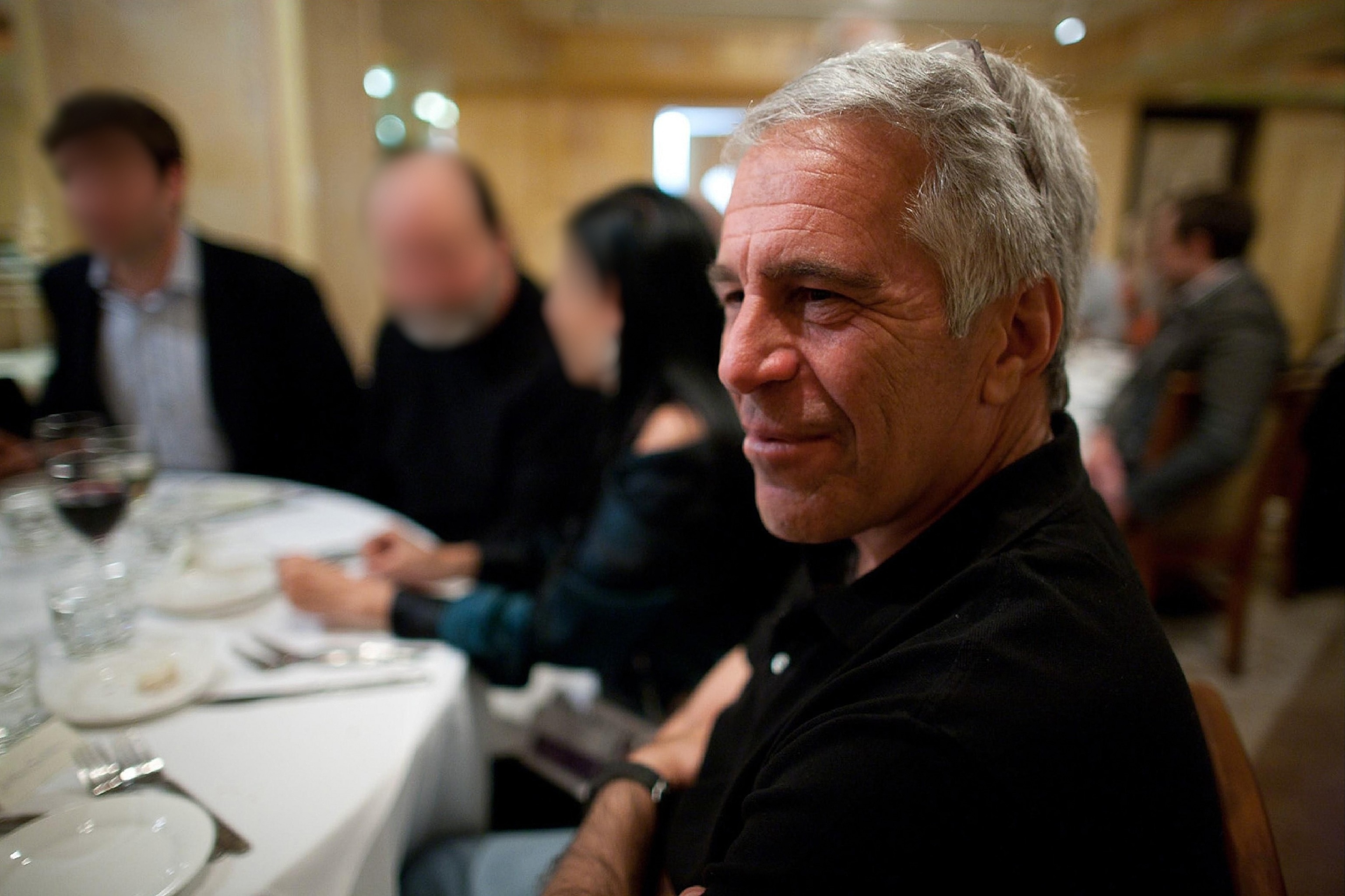
An undated photo from the estate of Jeffrey Epstein is part of a collection of images released Dec. 18, 2025, by Democrats on the House Oversight Committee.
House Oversight Committee Democrats
An internal FBI document created in August 2019, five days after Epstein’s death,shows nine persons listed as family and associates of Epstein, including eight labeled as «co-conspirators,» most with their names and faces redacted with the exception of Maxwell and Brunel. This points to potential continued interest in pursuing further charges after the death of Epstein. In his statement announcing Epstein’s death, Manhattan U.S. Attorney Geoffrey Berman said «our investigation of the conduct charged in the indictment — which included a conspiracy count — remains ongoing.» Maxwell is the only other person to be charged related to Epstein’s crimes.
Popular Reads
Among the other new documents released is what appears to be part of the original indictment against Epstein in his 2005 criminal case in Florida. The 100-page charging document contains information on 58 out the 60 charges against Epstein for his behavior toward six alleged victims. This document had never been made public.
Epstein ending up being offered a plea to reduced charges and was offered a non-prosecution agreement in a deal that was highly controversial.
Epstein’s trust agreement
Epstein’s trust agreement, which has never before been public, details how more than a quarter-billion dollars plus his sundry properties across the globe would be doled out to at least 44 beneficiaries when he died.
Epstein executed and signed the will on Aug. 8, 2019 — two days before he was found dead by suicide in his Manhattan jail cell.
The document was later signed by his longtime lawyer Darren Indyke, eight days after his death, on Aug. 18. His accountant, Richard Kahn, signed it on Aug. 20.
To his last known girlfriend, Karyna Shuliak, Epstein bequeathed $50 million. He also planned to give her his sprawling Zorro ranch in New Mexico; his island property on Little Saint James, as well as his property on Great Saint James. He also gave her his apartment in one of Paris’ most exclusive areas near the Arc de Triomphe, as well as his Palm Beach property and his townhouse on Manhattan’s posh Upper East Side.
Shuliak would also get a heap of Epstein’s diamonds, including a meticulously described near-33 carat diamond ring, which — in blue handwritten notes in the margins of the document — Epstein said he had given her «in contemplation of marriage.» It was «set with a rectangular-cut diamond, weighing approximately 32.73 carats, flanked by baguette-cut diamonds mounted in platinum.» She would also get «all of my loose diamonds,» Epstein intended — itemizing 48 of them.
To his longtime lawyer Indyke a nd his accountant Kahn, who were also the coexecutors of Epstein’s will, he planned to give $50 million and $25 million, respectively.
Ghislaine Maxwell was to receive $10 million. His brother, Mark Epstein, was also to receive $10 million, as was Epstein’s longtime pilot, Larry Visoski.
Some of the other beneficiary names are redacted but referred to as «she’s» and allotted several million dollars each. Several million dollars was also to be distributed to various employees, respectively.
Though the trust detailed that $288 million, as well as a collection of international properties, was to be parceled out, what now remains of Epstein’s estate is far from enough to fulfill that plan; according to the estate’s latest publicly available accounting, filed in the U.S. Virgin Island probate courts, there was $127 million left. And that total remains tied up in the USVI courts.
Musk mentions
The documents include correspondence between Epstein and billionaire Elon Musk spanning multiple years over a decade ago, mostly centered around coordinatingpotential travel plans and meetings, including planned visits to Epstein’s private Caribbean island.
Musk has denied ever visiting the island with Epstein.
Documents released last September by the DOJ initially showed a calendar note from Epstein that said to check with Musk about whether he was still going to Epstein’s private island. Musk responded then on X, writing, «Shame on Sky News for this utterly misleading headline. Epstein tried to get me to go to his island and I refused, yet they name me even before Prince Andrew, who did visit.»
The new set of documents released Friday included emails from December 2013 showing Musk and Epstein discussing potential travel plans for Musk to visit the island, including one message with Musk asking when he can visit.
Beyond the email correspondence, the documents also include a Google Calendar entry titled «ELON MUSK TO ISLAND DEC. 6TH» and a daily schedule for Epstein noting on Dec. 6: «Reminder: Elon Musk to island Dec. 6 (is this still happening?)».
Anemail Musk sent Epstein said, «Will be in the BVI/St Bart’s area over the holidays. Is there a good time to visit?»
Two days later, Epstein replied that early in the new year would be suitable and added, «always space for you,» before sending another message on Christmas Day: «the 2 or 3 would be perfect. I will come and get you.»
Musk initially responded that he would need to return to Los Angeles on Jan. 2, but later said he could delay his departure by one day.
Musk then asked Epstein again, «When should we head to your island on the 2nd?»
In an exchange from December 2012, Musk asked Epstein, «Do you have any parties planned? I’ve been working to the edge of sanity this year and so, once my kids head home after Christmas, I really want to hit the party scene in St Barts or elsewhere and let loose. The invitation is much appreciated, but a peaceful island experience is the opposite of what I’m looking for.»
Epstein replied that he «understood, I will see you on st Barth, the ratio on my island might make Talilah uncomfortable,» possibly referring to Musk’s then-wife.
Three data sets
As of Friday afternoon, the DOJ had uploaded three «data sets» to its public website. Just one of those sets included, by ABC News’ count, over 300,000 items.
A team of 500 attorneys from the Justice Department worked around the clock to review and redact material, Blanche said at his press briefing.
Friday’s tranche is the latest in a series of Epstein file releases that began last month in response to the Epstein Files Transparency Act, which passed Congress overwhelmingly and was signed into law by Trump on Nov. 19.The act gave the Justice Department 30 days to make publicly available all unclassified records pertaining to investigations and prosecutions of Epstein and Maxwell.
The bill contains several exceptions that allow for withholding or redacting records, notably to protect the privacy of Epstein’s victims.
Prior to Friday’s release, the DOJ had posted to its online Epstein library roughly 12,000 documents totaling about 125,000 pages — just a small fraction of the millions of records the department has been reviewing.
Those materials included a record of a complaint to the FBI filed in 1996, years before the disgraced financier was first investigated for child sex abuse. The documents also included new details aboutthe government’s investigation into potential accomplices as well as thousands of photographs of Epstein’s New York and U.S. Virgin Islands properties that were searched by the FBI after Epstein’s arrest in 2019.
Theinitial release of the filesalso contained numerous old photos of Epstein traveling with former President Bill Clinton, including pictures of Clinton lounging in a jacuzzi and one of him swimming with Epstein associate Ghislaine Maxwell, who is serving a 20-year prison sentence after her 2021 conviction for sex trafficking of minors and other offenses.
The images, which were released without any context or background information, contained little information related to Trump, leading a spokesperson for Clinton to accuse the DOJ of selectively disclosing the pictures to imply wrongdoing on the part of Clinton where he said there is none.
«The White House hasn’t been hiding these files for months only to dump them late on a Friday to protect Bill Clinton,» Angel Urena said. «This is about shielding themselves from what comes next, or from what they’ll try and hide forever. So they can release as many grainy 20-plus-year-old photos as they want, but this isn’t about Bill Clinton. Never has, never will be.»
The Epstein Files Transparency Act came after the Trump administration faced months of blowback from its announcement last July that they would be releasing no additional Epstein files, after several top officials — including FBI Director Kash Patel and former Deputy Director Dan Bongino — had, prior to joining the administration, accused the government of shielding information regarding the Epstein case.
Epstein owned two private islands in the Virgin Islands and large properties in New York City, New Mexico and Palm Beach, Florida, where he came under investigation for allegedly luring minor girls to his seaside home for massages that turned sexual. He served 13 months of an 18-month sentence for sex crimes charges after reaching a controversial non-prosecution agreement with the U.S. attorney’s office in Miami.
In 2019, prosecutors with the U.S. Attorney’s Office for the Southern District of New York indicted Epstein on charges that he «sexually exploited and abused dozens of minor girls at his homes in Manhattan, New York, and Palm Beach, Florida, among other locations,» using cash payments to recruit a «vast network of underage victims,» some of whom were as young as 14 years old.
ABC News’ Tia Humphries and Diana Paulsen contributed to this report.