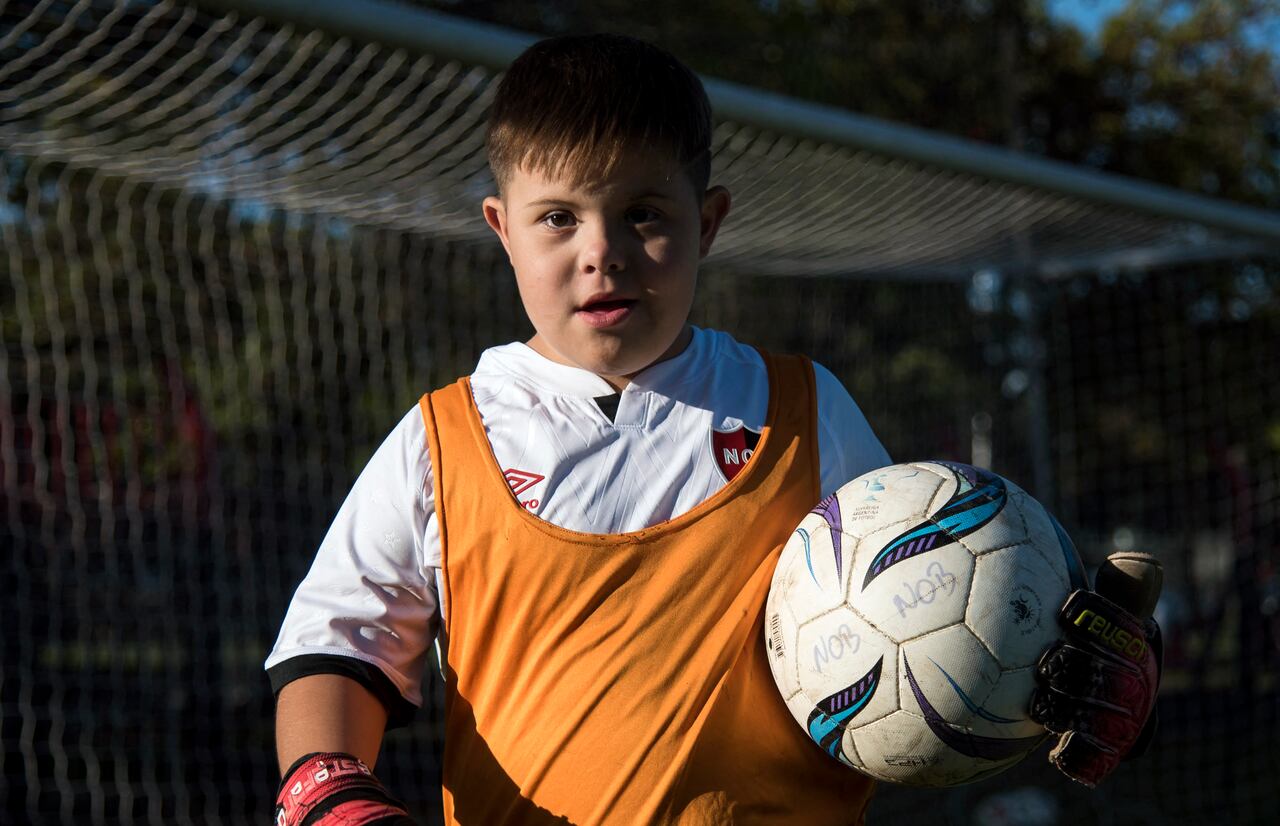
Every March 21st we commemorate the World Down Syndrome Daya date promoted by the United Nations to promote the inclusion, respect and visibility of people with this genetic condition.
The choice of day is not coincidental. Down syndrome is caused by the presence of a third copy of chromosome 21 (a condition known as trisomy 21) and that is why the commemoration is celebrated on the 21st day of the third month of the year.
Beyond diagnosis
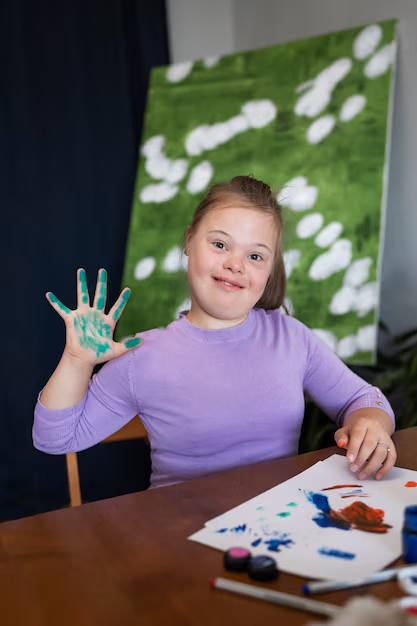
For a long time, Down syndrome was approached mainly from a medical or healthcare perspective. However, in recent decades a rights-based approach began to consolidate, which focuses on the educational, labor and social inclusion.
Organizations and specialists agree in what The most important barriers are usually not in the genetic condition itself, but in the obstacles that still exist in many areas of daily life.: from access to education to employment opportunities. In this sense, the current challenge is to promote more accessible environments that allow people with Down syndrome to develop their life projects autonomously.
Education and inclusion in Argentina
In Argentina, access to education for people with Down syndrome has advanced in recent years, although there are still important challenges. According to data released by the Down Syndrome Association of the Argentine Republic (ASDRA), andl 17% of children and adolescents with this condition between 3 and 16 years old did not enter the educational system, while almost half of those over 12 years of age still do not access secondary level.
At the same time, the Argentine educational system began to incorporate more and more students with disabilities into regular schools. A report cited by Infobae points out that two out of every three schools in the country have at least one student with a disability in their classroomswhich shows a sustained growth of inclusive education models.
However, specialists warn that the challenge is not only to guarantee presence at school, but also to ensure the necessary support so that students can learn and develop fully. True educational inclusion implies pedagogical support, adequate resources and training for school teams.
In this context, different social organizations promote campaigns to promote right of people with Down syndrome to study in regular schoolswith the adaptations that each student needs.
The challenge of labor inclusion
In Argentina, access to work continues to be one of the main challenges for people with Down syndrome. According to ASDRA data, More than 70% of people with this condition of working age do not have a joba figure that reflects the difficulties that still exist to achieve true inclusion in the labor market.
Organizations that work on the issue point out that the problem is not usually in people’s capabilities, but in social barriers: prejudices, lack of information and few inclusion policies within companies. In fact, different surveys show that only three out of every ten companies in the country hire people with disabilitieswhich significantly limits job opportunities.
Recently, however, initiatives have begun to be developed that seek to reverse this situation. Job training programs, on-the-job support and inclusion policies promoted by social organizations and some private companies are demonstrating that labor integration is not only possible, but also generates more diverse and collaborative work environments.
For many people with Down syndrome, accessing a job represents much more than economic income: implies autonomy, social participation and the possibility of building one’s own life project.
A cultural change underway
In recent years, the visibility of people with Down syndrome in the media, sport, art and culture has contributed to transforming the way in which society perceives disability, showing that abilities and life plans are as diverse as any other person. World Down Syndrome Day seeks precisely to reinforce this change of outlook: to move from a logic focused on limitations to a perspective that recognizes the rights, potential and dignity of all people.
Discover more from LatamNoticias
Subscribe to get the latest posts sent to your email.