

When you were a soldier it was also about risking your life, the story of the 20 rugby players from La Plata Rugby Club who live in the collective memory
50 years after the last civil-military coup, there are many stories that resonate in the capital of the province of Buenos Aires of those dark years in which terror gained prominence and advanced on a generation that had set out to change the world. La Plata, a thoughtful and planned city, with its picturesque buildings, squares and parks, was one of the cities hardest hit by the brutality of state terrorism and La Plata Rugby club, far from escaping the horror, has the sad record of players kidnapped, disappeared and murdered.
No club in the country of any discipline reaches 20 victims like the Gonnet club. The explanation is simple, in La Plata rugby in those years the senior team was made up of a group of socially committed boys, who were actively involved in left-wing parties and Peronism. Many of them carried out tasks in the popular neighborhoods of the city in addition to doing university politics at the National University of La Plata (UNLP). Others abandoned their studies to become proletarian, postponing their class privileges to live close to the reality of the workers and fight for their ideals.
The third periods of the Club had become true assemblies in which politics played a fundamental role and topics such as the economic and social reality of the country were discussed. Everything in the life of the club was agreed upon, voted on, debated and implemented according to the majority’s opinion.
I wanted. The clubs in the north of the province, more closely related to the dominant elites, saw these young people as a threat to their position of power and baptized the club as “Guerrilla School.” Players from that team that defended the yellow colors in the 1970s remember that although within the group they were not all Peronists, every time the top team played
meetings in which the Liceo Naval and Liceo Militar sponsored the local Canarians who arrived in buses and when they got off they formed a line, in which they stood one behind the other as in a parade and with bags on their shoulders they whistled the Peronist march before the look of repudiation of the locals who showed hostility towards them from their arrival until their return to La Plata, the fact is that the battle took place in all areas: In their own homes, at the faculty, in the neighborhood and of course also in rugby, which was the meeting point for a large group of young people who had chosen to give the
fight and alter the course of the country.
On March 30, 1975, while the senior team was making its first international tour of the Old Continent, news reached them like a bucket of cold water: Hernan Rocca He had been murdered with 21 bullets and thrown onto the bank of the El Pescado stream in the Villa Elvira neighborhood of the city of La Plata. Some time later it was learned that Hernán was being followed by parapolice task forces and that on the day of his kidnapping they had been taking photographs at a training session in which players who had not attended the tour participated. Rocca’s murder was a warning to the rest of his colleagues: If they insisted on defending their ideas, it could happen to them. Alerted by the news, the majority decided to go underground, but not abandon their fight, even Pablo Balut decided to start his militancy after learning what they had done with his friend Hernán by enlisting in the Marxist Lenninist Communist Party (PCLM).
Araceli, Hernán’s sister, tells in her book “Family Silence” that for a long time in his house his brother was not talked about in a search to make his disappearance hurt less, but one day that changed and he felt the need to give voice to that crime: «I lacked hugs as well as words. I knew I had to tell it, but to whom? I knew that the word would bring me the relief I was looking for. On the other hand, as you can imagine, I couldn’t go around saying that I was looking for someone to tell my story, which in reality was your story. However, I had to hide my search because in that place I felt that I shouldn’t mention it, it scared me. You’ll wonder why I was scared. They weren’t easy times, you lived through them. People were silent because it was not known who was on the opposite side. Alĺí was “sister of” and I felt that maybe it could be dangerous. Do you realize? Denying your existence is unthinkable… can you forgive me?
His book highlights his brother’s collective conscience, something in common with the rest of his teammates who played a bigger game and their commitment pushed them to defend him until their last breath. «And then the images come back when mom filmed your rugby games while you started your sports diary. I tell you that when we found it, we were surprised. One of those school folders lined with images from some magazine of the time… No
We imagined that you had so much will to paste the newspaper clippings from ’68 and comment on them. The recording of the details in the diary is impressive, we were moved by your story of a team that advances… you never show yourself as the scrum half star, but rather your group conscience and the fight for the objective is seen. […]. And you had a bunch of pages left over… without writing… in ’74 you were already in your second year of Medicine and your political consciousness was beginning to awaken. The thing is that the country, even though we were in democracy, was convulsing. I found out later that you were interested in doing something… You were already starting to read about politics. Those readings formed a different thought than the one in the family. But the old people were like that. Everyone could think as they wanted. A house with freedom of thought, a country with dubious freedoms…”
Rocca’s murder was followed by Hugo Aníbal Lavalle Casamiquela“Pinino”, as his friends nicknamed him, was in his third year of Architecture at the UNLP, and was active in the Workers’ Revolutionary Party (PRT). He was murdered by the army along with two companions on the banks of the San Gabriel Stream in Acheral, Tucumán within the framework of the so-called “Operation Independence” and then the Pablo Del Rivero who studied geology at the UNLP and was active in the Peronist University Youth (JUP). He was assassinated by the paramilitary task group National University Concentration (CNU) on July 7, 1975 in an operation called “Operation Once for Ponce” in which this group retaliated for the death of one of its members. In this way he became the second rugby player from the Gonnet club murdered before the coup, when the state systematized the repression and went after the rest of his teammates.
The list is completed with:
Santiago Sánchez ViamonteAccording to what they say, “El Chueco” was the club’s most promising player, an irreverent, brave and supportive scrum half. He studied medicine at UNLP. He was kidnapped and disappeared along with his wife Cecilia Eguía and his two friends from the club and the (PCML) Pablo Balut and Otilio Pascua on October 24, 1977. He was the father of two daughters.
Otilio Pascuahe studied architecture with Cecilia at the UNLP, he was 27 years old.
Pablo Balut“El turquito” was 25 years old. He was the father of a son.
Mariano Montequin“Mané” was 25 years old, he was active in the (PCLM), he studied Economic Sciences at the UNLP, he was kidnapped and disappeared on December 6, 1977 along with his partner Patricia Villar and his partner Virginia Isabél Cazalas de Giglio, within the framework of the so-called “Operativo Escoba”.
Jorge Mourahe was 27 years old, he was the brother of Federico, Marcelo and Julio, remembered by the great band Virus. Jorge was studying Architecture at the UNLP and was a member of the People’s Revolutionary Army (ERP) at the time of his kidnapping on March 8, 1977. His brothers said years later that his dream had been to put together a band with them and play for a large audience. Jorge had moved to his parents’ home in City Bell after his girlfriend’s kidnapping and disappearance, thinking he would be more protected there.
Luis Munitis Orionewas a member of the (ERP), he was in Sarandí when he was arrested and disappeared on May 17, 1977. He was studying his last year of medicine at the (UNLP).
Eduardo Navajas Jáureguiwas a Montoneros militant, he was 21 years old and had abandoned mandatory military service due to the harassment received by the leaders of the Mechanized Infantry Regiment No. 7. He was declared a deserter. He was kidnapped and disappeared on January 23, 1977 in the town of Tres de Febrero.
Mario Mercader, He was a member of Montoneros, he was 22 years old when he was kidnapped and disappeared along with his wife Anahí Fernández at their home in Tolosa. In 2010 he was identified as NN, and it was determined that the police had engineered a confrontation on April 5, 1977 in which he had been murdered.
Enrique Sierra“El Nene” was 22 years old when he was kidnapped and disappeared in Ituzaingo. He was a member of the Peronist Youth (JP). He studied law at UNLP.
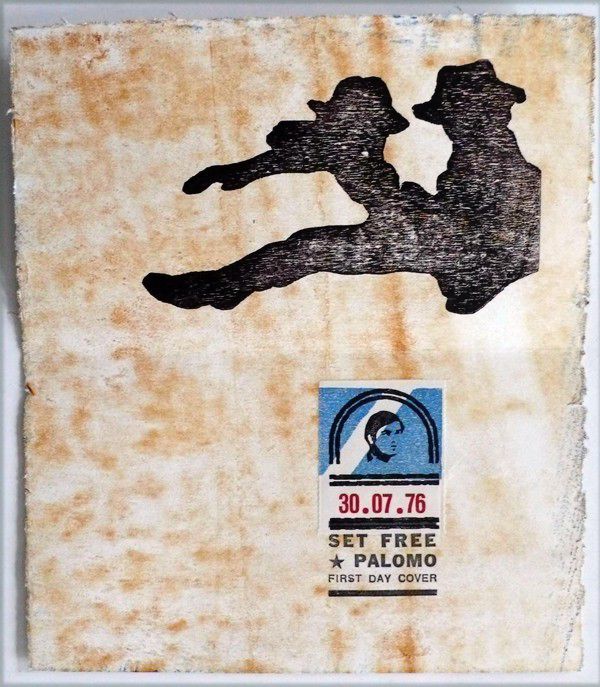
Abel Vigo“Palomo” was 19 years old and was a member of the Union of Secondary Students (UES), although he had already enrolled in the Physical Education program at the UNLP. He was kidnapped at his parents’ home in the City of La Plata on July 30, 1977. His father Antonio, an artist and teacher, issued a stamp and a postmark with the inscription “Set Free Palomo” that circulated throughout the world, thus finding a form of resistance through art.
Alfredo Mauricio Reboredowas kidnapped on January 29, 1977 while walking along 7th Avenue with his partner Alfredo Schmucler. Alfredo tried to escape and was shot. A woman from a car pointed out both of them. Both were militants of the (UES).
Eduardo Merbilhaáwas a member of the (ERP) and was kidnapped and disappeared on September 14, 1976 in Villa Devoto, Federal Capital. He studied Law at UNLP.
Alejandro García Marteganiwas kidnapped in the province of Neuquén, while performing mandatory military service. He was 22 years old and was a member of the Peronist University Youth (JUP). At the time of his disappearance he was studying Architecture at the UNLP.
Marcelo Bettinistudied agronomy at the UNLP, began his activism in a Catholic group that carried out pastoral tasks in popular neighborhoods of the city. He came from a wealthy family, but his sensitivity pushed him into active fighting, entering the (JP) and then Montoneros before his murder in Tolosa, along with his partner Luis Eduardo Sixto Bearzi on November 9, 1976. After his murder, his family was persecuted, kidnapping several of its members, and
Several of their properties were stolen from the hands of the military through extortions in which they were forced to part with titles at gunpoint and torture.
Abigail Attademohe was a member of the (ERP) and was arrested and disappeared along with his wife Elena Susana Mirenna at 26 years old in the Caseros town. They were medical students at (UNLP).
Julio Alvarez“Taco” was a member of the (ERP) was kidnapped and disappeared along with his partner Luis Antonio Barassi on December 21, 1977 at the Pueyrredon bar in Villa Crespo, Capital Federal. He was 25 years old.
Rodolfo AxatHe was a member of the Revolutionary Armed Forces (FAR) and Montoneros, was kidnapped and disappeared on April 12, 1977 at his mother-in-law’s home with his wife. Ana Inés Della Crocce when they were with their one-year-old son Julián. Julián grew up without his parents, and years later became a poet. One of his poems “The Romantic Canaries” is dedicated to those missing militant players:
“The pack sinks against the wind / while
Luisito Munitis makes the line and the forwards jump / to contract the back of the
monster. La Plata goes… the samurai Balut whispers and / Jorgito Moura breaks the entrance
of the battalion, so that the third line that remains oblique from the
genetic sensitivity of A. Vigo Quique Sierra’s gaze shines with a tackle that does not
He manages to cut off the pass to Pablito Rivero.
The game is already, Alfredito Reboredo dreams, when La Plata goes… and the win forward
Navajas and Mercader open the maul. It seems like a tied tie, the night is
stops without defeat and in the last minute Julito Álvarez approaches the goal, jumps a
kite and sees Fel Axat lurking, Fel receives the oval… but he barely touches it
When Chueco Sánchez Viamonte comes along the line he runs in a zig-zag like
a rabbit, no one sees those feet, fast, unstoppable, fleeing towards infinity in a trend of
roses that arrive from the audience/leave the last stars tired now behind/badly
stops and supports the oval under the sticks.
Fel and Chueco hug each other, laugh victoriously, wait for everyone who arrives to
embrace. The third period opens the doors of heaven to them to take it by storm.
Try.”
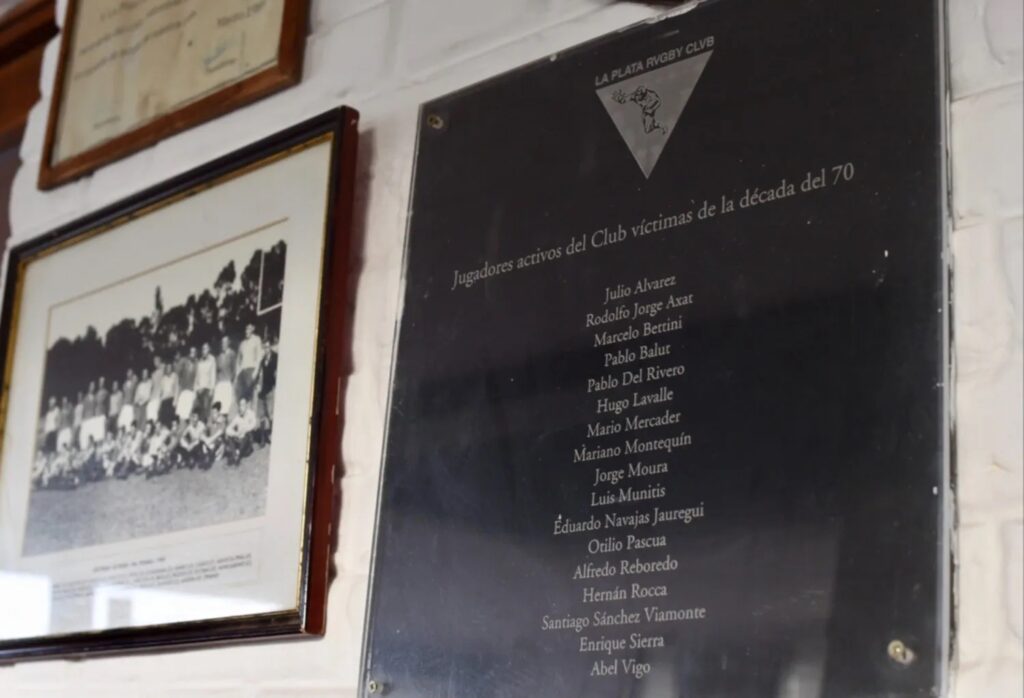
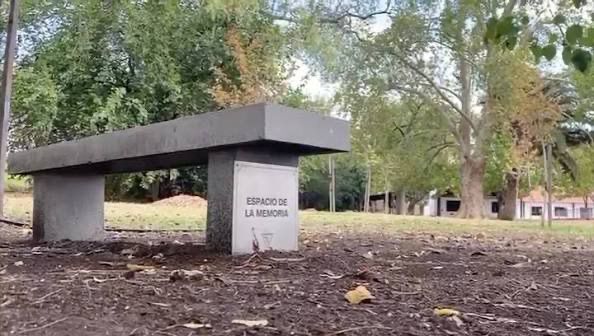
They all believed in a more just world, and rugby gave them a place to test teamwork, solidarity and camaraderie.. Fifty years after the horror, the Canarian has a privileged place in the Buenos Aires tournament, competing in the URBA Top 14, and is one of the clubs in Argentina with the largest number of young people in its ranks, which predicts a promising future for the institution. But history teaches us that a future cannot be projected without repairing the past, and those who have disappeared from the club cannot be forgotten, which is why their memory is always present in the room where the board of directors meets, where you can see a plaque with their names next to the club’s shield, and in 2023 the “Memory Bank” was inaugurated, which invites reflection on the genocide experienced at the hands of the state in our country.
Although their physical existence was interrupted, each of the victims left a legacy, in their children, in their parents, in their friends and in those who know that a more just and equal world is possible.
Present now and always.
Federico Granillo Fernandez
Former player, former manager and current coach of La Plata Rugby Club