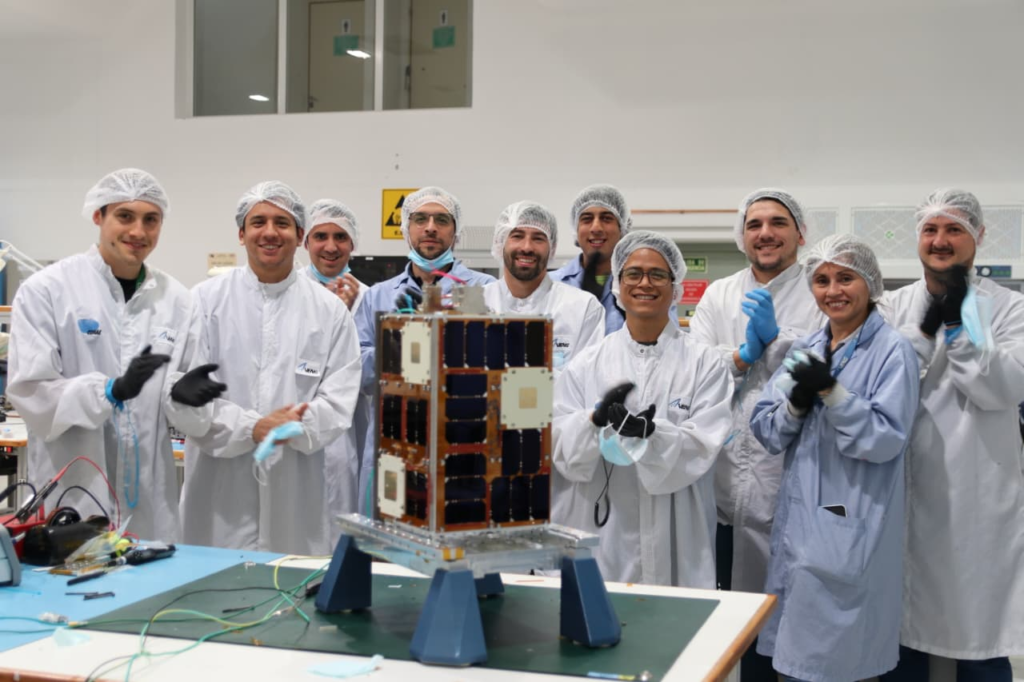

In the world of aerospace engineering, margins of error do not exist. For Eric Molina and his team at the Aerospace Technology Center (CTA) of the UNLPtoday’s launch on the mission Artemis II of NASA represents the culmination of a dream that was born in the hallways of the faculty and today rests on the tip of an SLS rocket, ready to make history.
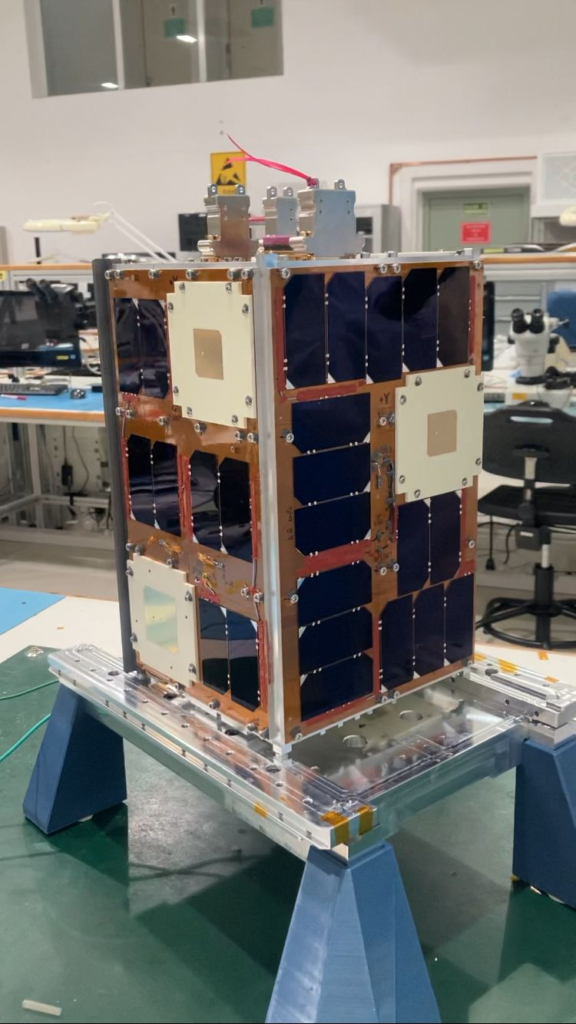
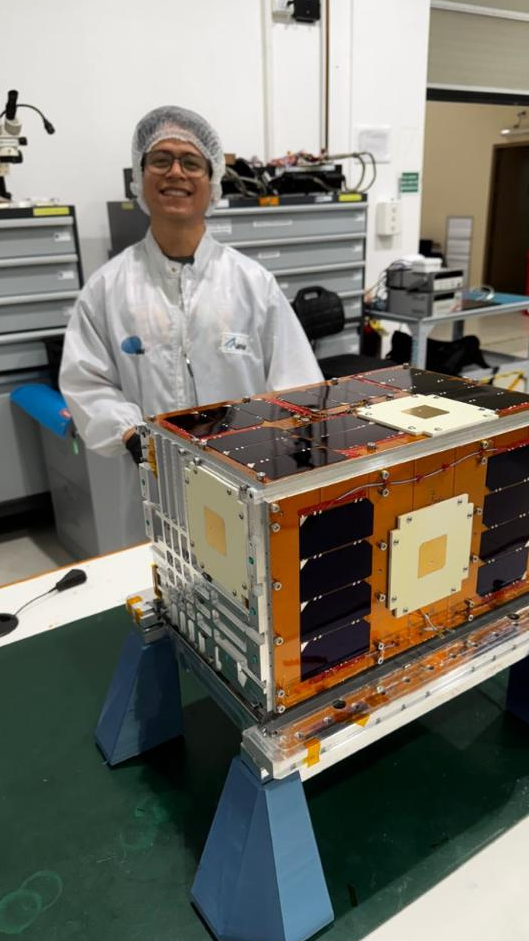
From Vive We are closely following this milestone: ATHENS It is not just another satellite. He is Latin America’s first technological ambassador in deep space, and Erick has been one of the protagonists who gave rise to the development of this precision machinery.
Exclusive interview: The man behind the mission
— Erick, to size up: we are talking about sending Argentine technology to (70,000) kilometers from home. How do you manage the pressure of knowing that there is no room for technical service once the rocket fires its engines?
On the one hand, the team and I feel very excited and proud to know that something designed, developed and built at the university and by ourselves is going to go to space. On the other hand, we are very clear that once it takes off there is no second chance, however we feel prepared because we know how all the work was done. It is not a leap into the void, it is the result of having reduced uncertainty and any unwanted situation during the launch
— It is mentioned that ATENEA is going to measure radiation, but there is a very strong “technological sovereignty” component in this project. What are we really testing up there?
Beyond scientific objectives, such as measuring radiation or testing communications in such an elliptical orbit, we are also testing our ability to carry out a complete mission of this level. Procedures, documentation, integration, and also how the team works are validated under very demanding standards. It’s not just whether the satellite works, it’s whether the entire process that got you there is robust and repeatable.
Being a mission with such a high level of demand, success not only validates the design of the satellite, but also the people and the way things are done. That then remains as support to face future projects.
— You had to be part of a multidisciplinary team in a context where resources are not always plentiful. What makes the Argentine engineer special in this type of international missions?
Mainly the ability to adapt. There are many supplies that are not always available when you need them, and that forces you to find alternatives without slowing down the project.
In these missions, times are critical, so you cannot wait for a component to arrive: you solve with what you have, but without lowering the level of demand.
—What is the first piece of information you expect to receive once ATENEA deploys from the Orion capsule?
After separating we have about 10 minutes in which the satellite executes the entire ignition sequence. After that time, the satellite should start transmitting.
The first data is: telemetry, battery level, orientation. With that you already know if he is alive, and in what condition he is. When those first data packets arrive, the first objectives of the mission are accomplished.
— Erick, beyond calculations and aerospace technology, you are a product of public education. If today you had to explain to a student who is just starting out at CTA what it means to take the UNLP seal to the Moon, what would you tell them?
That with effort, curiosity and desire, you can go from the common classroom to working on projects as important as this one. The UNLP seal is not just a logo: it is hours of study, work and people who trained you, until you reached this point.
All of us who carry the logo are very proud to know everything that is done in the department.
To all those who would like to be part of missions of this importance, do not stop dreaming and trying. That’s the most important thing
What you need to know about the mission:
The radiation challenge: ATENEA carries sensors designed to understand how radiation affects electronic components, a key piece of information so that humans can safely set foot on lunar soil again.
Positioning: The satellite will use GPS and Galileo signals in an experimental way to determine its position at distances where the margin of error is usually kilometers.
Historical milestone: It is the first Argentine development that moves away from low Earth orbit to face deep space.
ATENEA technical details
Format: CubeSat (small but powerful).
Alliance: A joint effort between the UNLP, CONAE, the Argentine Institute of Radio Astronomy (IAR) and companies in the sector such as VENG.
How to follow the launch today?
The event can be followed live through the official channels:
NASA TV: https://www.youtube.com/watch?v=Tf_UjBMIzNo
Streaming UNLP: With comments from CTA specialists. https://www.youtube.com/watch?v=MWeNy-Dv1Ww
Vigil in CABA: At the Galileo Galilei Planetarium, a concentration of enthusiasts and specialists from the 18:00 hs to live minute by minute.