
Astrology stopped being that quick horoscope that you read in passing and began to occupy another place: that of a symbolic tool to think about identitylos links and the moments of change. In a context where more and more people search for meaning in the midst of everyday life, their practice is given new meaning and gains depth.
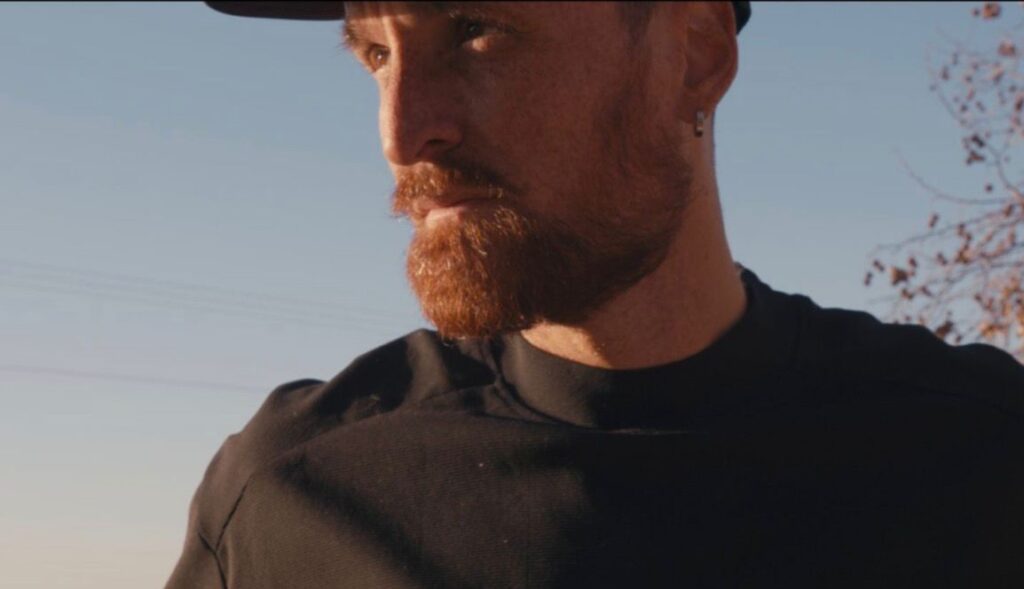
To understand how the sky is read today—and what place it occupies in the lives of those who consult it—we spoke with the astrologer Lucas Chaumont,, which proposes a look sensitive and contemporary: far from absolute certainties, astrology appears as a language that does not define, but rather accompanies processes.
“Astrology does not define what we are: it offers us a language to understand what we are going through.”
— Lucas Chaumont
More than predicting, it is about interpreting. Learning to observe cycles, recognize internal tensions and open questions. Because, ultimately, the map is not in the sky: it is in the way in which each person inhabits it.
Today, the growth of interest in astrology also dialogues with a broader cultural change: the need for tools that integrate the emotional, the symbolic and the spiritual, without separating it from concrete experience. At this intersection, astrology finds a new place, closer to introspection than prediction.
Read beyond the technique
Are there different reading currents? If so, what differentiates your way of reading astrological maps from other currents?
Regarding the currents of astrological reading, I believe that there can be infinite ways. Since astrology is a symbolic tool, the depth of the reading is in relation to the depth of the person reading. Deep down, what I value is not so much what is said, but rather the ability to perceive—intuitively and empathetically—what the other person may receive.
For someone who has never had a birth chart done, what is the most valuable thing they can take away from a first session with you?
In a first session, the most valuable thing is to be able to leave with enthusiasm, with a feeling of internal movement. That is, something has changed in the energy with which the person came to the consultation. Then, over time, thoughts become organized. That is why they also take the recording of the reading: to be able to listen to it again and delve deeper into what was said from a new place, based on the experience of having taken that view into everyday life.
Common myths and mistakes
One of the greatest contributions of astrology is that it orders internal chaos. He puts words to what is often felt but not understood. However, it is also a field where simplifications abound.
The most common mistake is to think that “the planets force.” There is no closed destination. Astrology talks about trends, about energetic climates. The decision is always human.
Another fairly widespread myth is to reduce everything to the sun sign. Saying “I’m an Aries” or “I’m a Libra” is just scratching the surface. Astrological identity is much more complex: it includes the Moon, the ascendant and the interaction between all the planets.
Do you think there are any other myths or common errors?
I always have the hope of believing in him freewillbut I like to expand the question: what would happen if decisions were not the condition that defines our freedom, but rather the way in which we face—emotionally and internally—the conditions that are given to us in life?
Synastry: the map of links
Just as the birth chart is the map of an individualsynastry is the study of interaction between two cards. It’s not limited to romantic bonds: it can also apply to partners, family ties, or deep friendships.
In a synastry, both maps are superimposed to observe how their planets dialogue. From a psychological perspective, it does not seek to determine if a relationship “is going to work,” but rather identify points of harmony and sources of conflict. It is, in essence, a link understanding tool.
Many people come asking about compatibility, is that what synastry is looking for or does it go beyond a “yes” or “no”?
Synastry is a very complex universe because it brings together many readings simultaneously. At best, it should not simplify our view of a relationship by defining a degree of compatibility. When we talk about links, the most important thing is not to fall into the reductionism of transforming the other into an object of our desire. Many times, love is about transforming, not confirming oneself.
Although there are signs that are more compatible than others, have you ever seen stable relationships between “incompatible” people? How do you interpret it?
I don’t think compatibility is defined by signs, nor can it be simplified as «good» or «bad.» There will always be different degrees of tension or fluidity. Compatibility has more to do with the psychology and personal history of each individual, which can facilitate or hinder the bond.
What do you give most importance to in a compatibility map?
In a synastry, the key is to observe and work on the unconscious aspects between both. Being able to perceive that the other functions as a mirror of one’s own evolutionary process that needs to be assumed and experienced.
Saturn Return: the true revolution of the 30s
There is a moment that many people have heard of: the famous “crisis of 30In astrology, it has a specific name: the Saturn Return.
It occurs approximately between the ages of 28 and 30, when Saturn returns to the same point in the sky where it was at the time of birth. More than a crisis, it is a rite of passage.
Saturn represents structure, time and responsibility. When it returns, it reveals everything that is not aligned with our most authentic reality. That’s why, it is common to go through profound changes at this stage: breakups, moves, job changes or life rethinking.
It is not punishment or bad luck. It is, symbolically, a graduation.
Do you think this event has a strong impact on everyone? Why is it considered a turning point? Can it be accompanied by astrology?
It is an interesting topic because, personally, I have Saturn aspecting my Sun, and I think it takes time to understand this “master”. At first, I would say that this planet helps us connect with the limit as an expression of freedom, although culturally we live it as restriction or frustration.
What Saturn shows is that the limit is a creative component. Pain, difficulty and resistance are tests that, in some way, allow us to grow and mature.
The Solar Revolution: read the personal year
The Solar Return is activated on every birthday. Does it apply only to people or also to events? Why is it important to know this annual map?
The Solar Revolution is the reading that is carried out in each birthday. There are many specific techniques that do not appear in the birth chart. The most interesting thing about this annual meeting is the possibility of entering into the rhythm and cycles of an intelligence that orders us and sustains us — each one will name it according to their belief.
The important thing is to create space for read what is happening and be present, living from the moment, and not from a memory trapped in the past.
“The limit, which we often experience as frustration, is actually one of the deepest forms of freedom.”
— Lucas Chaumont
You can follow their work and learn more about their queries on Instagram as @sincroastrowhere he shares content and reflections on astrology.
- Location and reviews: https://maps.app.goo.gl/h7oR1LnNRH22PhDG6
- WhatsApp: +54 9 11 3293-4661