

In a world of mass production, lutheria continues to be a space where time, listening and detail define the final result.

Since ancient times, the construction of instruments was surrounded by an almost mystical aura. In different cultures, it was believed that the wood “chose” the luthier, and not the other way around. In 17th century Europe, for example, some builders kept their techniques secret as if they were alchemical formulas, convinced that the perfect sound was a combination of science, intuition and something impossible to fully explain.
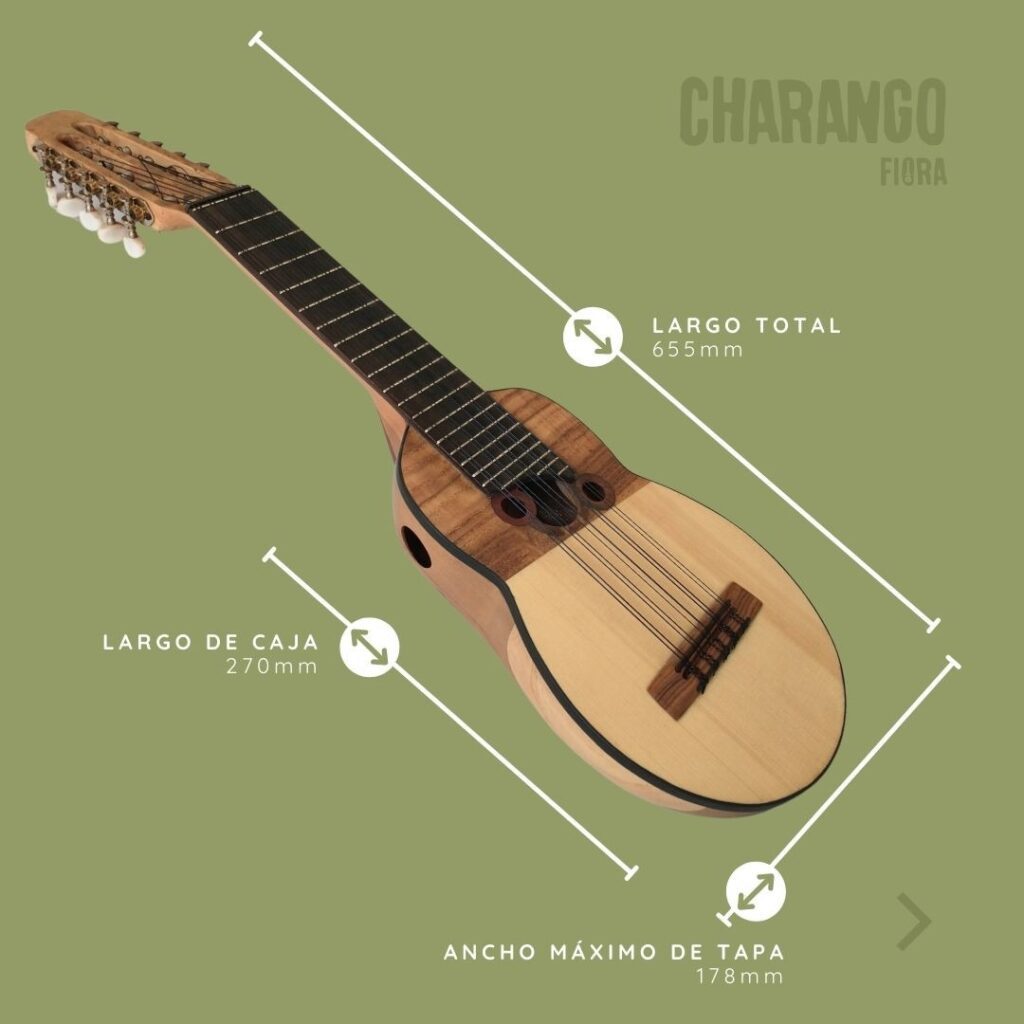
Similar stories appear in Latin America, where instruments like the charango are born not only of necessity, but also of adaptation and cultural identity. During the colonial era, faced with the prohibition of certain European instruments, Andean communities began to create their own versions with available materials, giving rise to completely new sounds. There are even stories that talk about how Some builders chose specific woods based on their “energy” or history, believing that this directly influenced the soul of the instrument.
There are still jobs that resist from another place: that of patient work, sound search and direct connection with the musician. Lutheria is one of them.
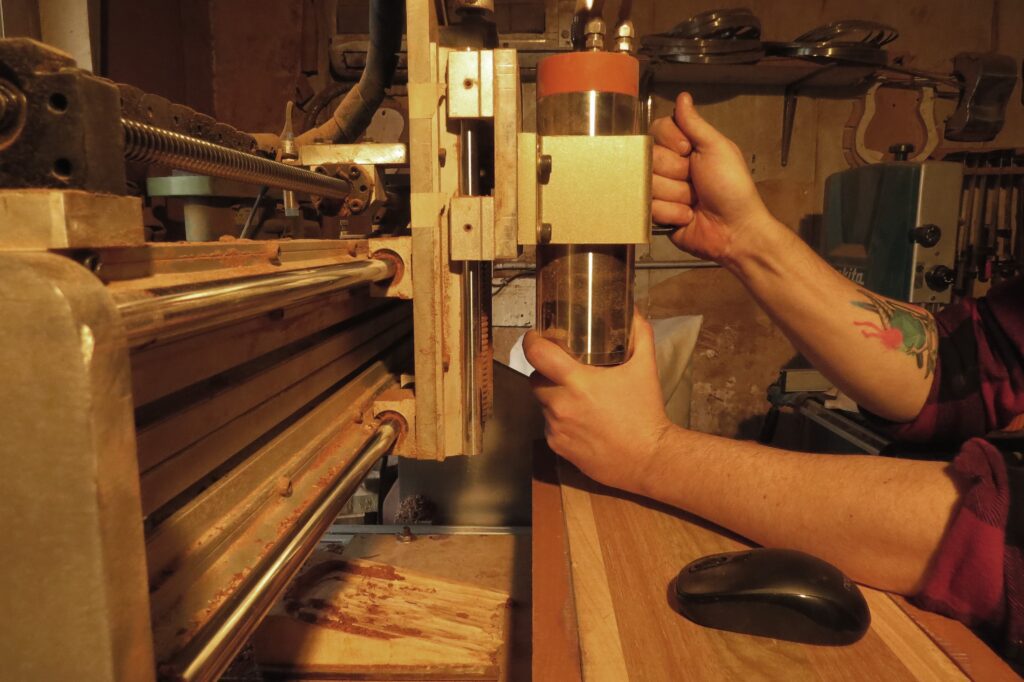
In that universe he enters Fioravanti Luthier, a project that focuses not only on the construction of instruments, but also on the meaning behind each piece. Because it is not just about manufacturing: It is about interpreting a sound, an intention, an identity.
The instrument as a process, not as a product
A luthier’s journey is rarely linear. In many cases, it starts from the music itself, from the need to understand the instrument beyond its use. That initial bond usually transforms into curiosity, and over time, into a job.
—How did your path in luthiery begin and what led you to dedicate yourself to this profession?
—I’ve been working on this for about 20 years, more or less. I started at 19 with my first instruments. I played guitar and some Latin American instruments, and I was always interested in the instrument as an object, as a “machine.” I looked at him with great enthusiasm. If strings had to be changed or any repairs made, he found out, consulted and got his hands on it.
From a very young age, at 15 or 16 years old, he made arrangements: hitting a fret, adjusting a peg, experimenting with string tensions or stringing. I liked to grab old instruments and try to recover them. The most formal beginning was at 18 or 19, when I started chatting with colleagues and built my first instrument: a very poorly made, very ugly charango. I still have it there. But you learn from those mistakes.
The origin lies in curiosity about the instrument itself. When you play, you spend a lot of time with it in your hands. Sometimes you are not aware of it, but it is like that: there is constant contact, a lot of subtlety in how it responds—the humid days, the length of the ropes. If one has a certain sensitivity, that link always leaves something behind.
A luthier’s journey is rarely linear. In many cases, it is born from music itself: from the need to understand the instrument beyond its use. That initial bond usually transforms into curiosity and, over time, into a job.

—Luthiery was historically surrounded by a certain mystique, between technique, intuition and even beliefs about materials. In your case, How do the artisanal, the technical and that more “intuitive” or sensitive dimension coexist when building an instrument?
—That question about intuition and technique is good, very pertinent. Lutheria is a profession —I always say it when I give classes or talks—, but it is, in reality, a job of jobs. There is cabinetmaking, architecture, morphology; There is an artistic dimension, another acoustic dimension and another directly linked to music. Also everything that is marquetry. It is a very broad field that brings together practices that were previously separated.
That means managing several areas at the same time. And, in general, no one is an expert in everything, but rather one specializes. This specialization requires technical knowledge if you want to do the job well: understand acoustics, materials, structures. There is the technical basis of the trade.
And then intuition appears, but not as something magical. It is directly linked to experience. Over the years you become more intuitive because there was a lot of prior rehearsal. Today I receive an instrument, I look at it and I detect things that I didn’t see 20 years ago, and that someone who is just starting out probably wouldn’t either. That finer reading has to do with the journey. Intuition, in that sense, is accumulated craft.
The search for one’s own sound
Each instrument is unique, not only because of the materials or technique, but because of the intention.
—What do you look for when you build an instrument? Is there a prior sound idea or is it discovered in the process?
—There is always a prior search. It starts even before the design, when one imagines it. Then that is translated into concrete decisions.
It is not an exact science. What we do is orient the instrument towards a certain place, in dialogue with the musician who is going to use it. Sometimes it turns out better, sometimes worse. Over the years, what one plans before building becomes more consistent.
Each instrument is unique, not only because of the materials or technique, but because of the intention.. In instruments such as the charango, the ronroco or the guitar, that sound identity dialogues with a tradition, but also with a contemporary reinterpretation.
Materials, technique and sensitivity
The wood, its parking, its acoustic response, the climate: everything influences. But there is also something more difficult to measure, which is the sensitivity of the luthier to read each piece and understand what it can offer.
—How important are the materials in the final result and what is the selection process like?
—They are less important than is usually believed. Or rather: not in the sense in which we usually think.
An excellent instrument can be made with simple materialsand a very bad one with “prestige” materials. The key is how they are worked: drying, parking, selection of cuts, fiber orientation.
The wood has to be stable. It is not just a question of humidity, but of how its resins behave. Each piece requires specific criteria according to its density and function.
Then there is a component more linked to marketing around certain woods. But the result depends on the work: of the thicknesses, the treatment, the sensitivity to understand what each material needs.
For example, a soundboard needs very particular care. Something that industrial processes, due to their productive logic, cannot always offer. That’s where time and craft come in.
Between the artisanal and the contemporary
Far from disappearing, luthiery seems to occupy an increasingly valued place. In a context where the massive loses singularity, the handmade regains meaning.
—How do you see the place of luthiery today in a market dominated by industrial production?
—I don’t think there is direct competition. They are worlds that coexist, but do not completely overlap.
Craftsmanship has its own value: the personalized treatment, the bond with the instrument and with the musician. That’s something that The industry tries to replicate, sometimes discursively, but in practice it is difficult to sustain.
Today, in fact, there is a revaluation of what is handmade. In a context where the massive loses singularity, the artisanal regains meaning.
The link with the musician
Unlike a standard product, the handmade instrument is often built in dialogue. It’s not just a transaction: it’s a shared process.
—What is the work process like with someone who orders an instrument?
—Well, like any relationship, it is very varied, right? Like any interpersonal relationship, it is generally unique. And not necessarily because there is a deep personal relationship, but because each person is different and so is each linkeven if it is something ephemeral.
One links to build the instrument. Sometimes that bond is sustained over time, friendships appear; other times it is more punctual. But even when it’s short, it’s still unique.
The first thing is the dialogue: understand what it is what are you looking for the musician Sometimes it is very clear and other times not so clear, and that is the same. it is built in the conversation. Many times it happens that they arrive with a fairly rigid idea and, in the process, that changes… as in any relationship.
There are those who know exactly what they want and one adapts; and other times it is a more open back and forth. In general it is a very interesting process. And well, every now and then a more conflictive bond also appears… as in life.
More than an instrument
—What do you think someone who chooses an instrument made by a luthier is looking for today?
—It’s very diverse. But when someone arrives, there is already a previous journey: they saw your instruments, talked to other musicians, researched.
I think that there is a search for trust and tranquility. The musician needs an instrument that responds to him, with which he will live for many hours.
Afterwards there may be an aesthetic or sound identification. But, above all, there is trust in each other’s work.
It’s not just sound: it’s history, identity, belonging.
A job that continues to resonate
The work of projects like Fioravanti Luthier not only keeps a craft alive, but also invites us to rethink the relationship with the objects we use to create. Because when an instrument is handmade, it doesn’t just sound different: it also feels different.
Do you want to learn more about his work or order an instrument?
You can explore more about Fioravanti Luthier through their channels and discover the process behind each creation.
WhatsApp: +54 9 11 6332 3924