

By: Galo, Maíl.
The work of Omar Tricarico directed by Nico Sorrivas delves into the psyche of Zuné, a man trapped in a love of “liquid eternity” that shakes the foundations of his own identity.
The refuge of consciousness and the shadow of desire
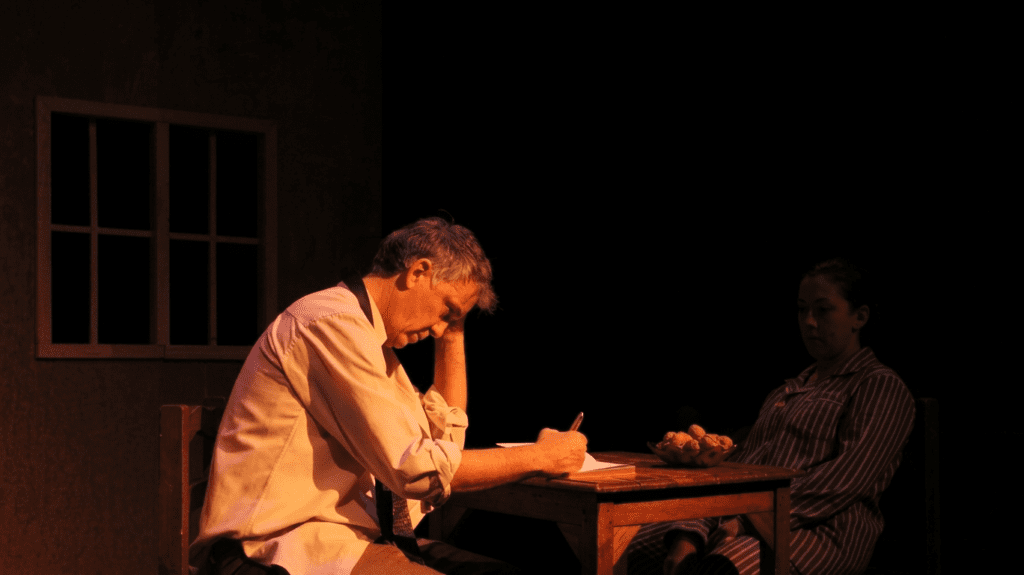
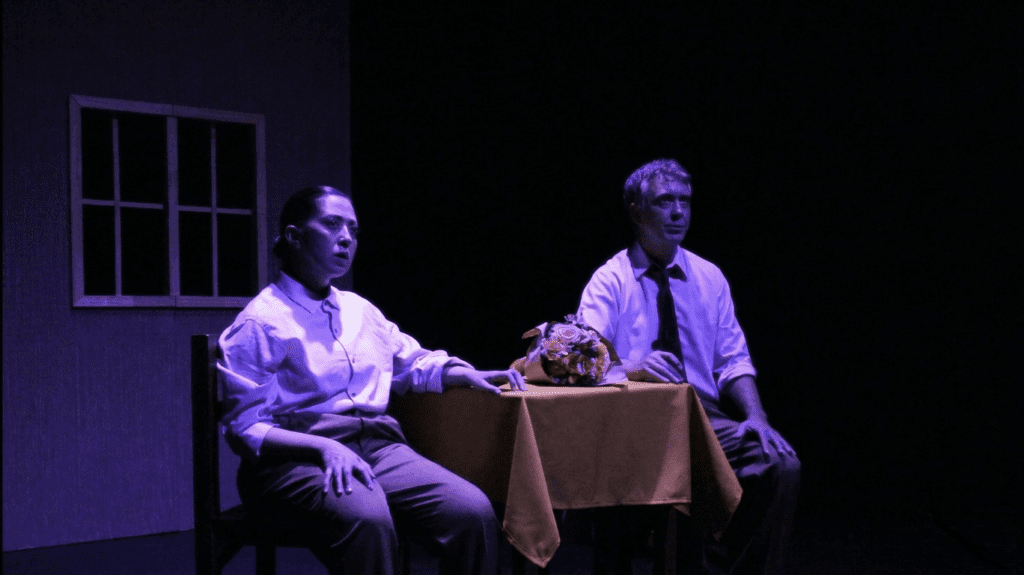
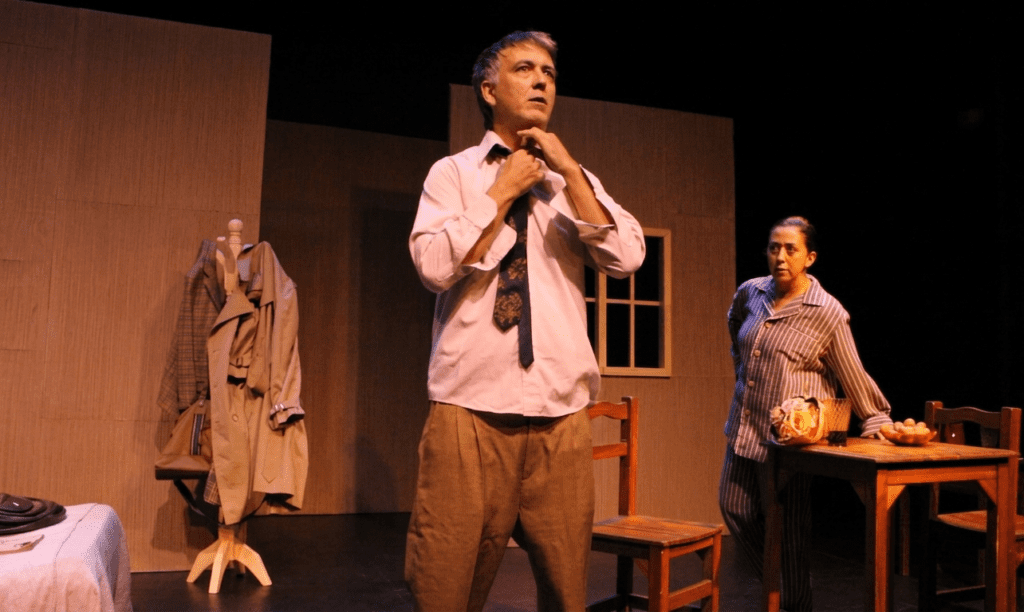
The staging takes us to the intimacy of the home of Zuné (played by Fabian Losada), a space that stops being physical and becomes an emotional map. There, the protagonist is not alone: live with your own consciencepersonified in a masterful way by Mavy Yunes. Her “she/him” is the mirror where Zuné sees herself. piecesoscillating between the rawness of the iInstinctive instinct and exposed tendernessalmost without destination.
Zuné expresses his tenderness and devotion in response to heartbreak of a woman who lives in the shadows of his double life. She appears like a mirage, swearing eternal love and offering words that sustain, but her departure leaves behind a loneliness that runs deep. The work uses this link to explore the duality of being:
Are we what we love or what we remember when the other is gone?
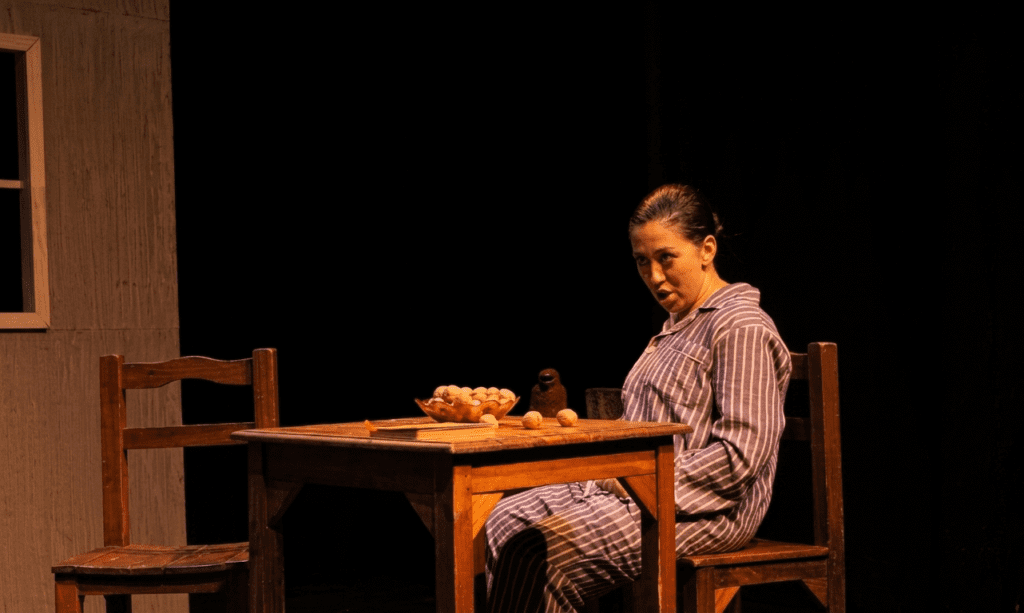
As an actress embodies his psyche, the protagonist’s fracture becomes visible: its most poetic and vulnerable part takes on a life of its ownalmost alien to his body, showing that in his solitude Zuné is a man inhabited by the echo of what he loves and what he has lost.
Chronicle of a hidden heartbreak
The strength of this work lies in a dialogic exchange loaded with poetic nuances that explore the deepest corners of affection. It’s not just theater; It is, at times, an open letter to heartbreak.
Conversations with that “inner voice” veer between the purest tenderness and an emotional survival instinctwhile the scenography reinforces the idea of a home that is, at the same time, refuge and cell of memories.
Each appearance of her works like a breath: she swears eternal love and gives Zuné the exact words to continue breathing. But when he walks through the door, The emptiness returns with a silent violence that drags him towards a dense, almost tangible sadness.
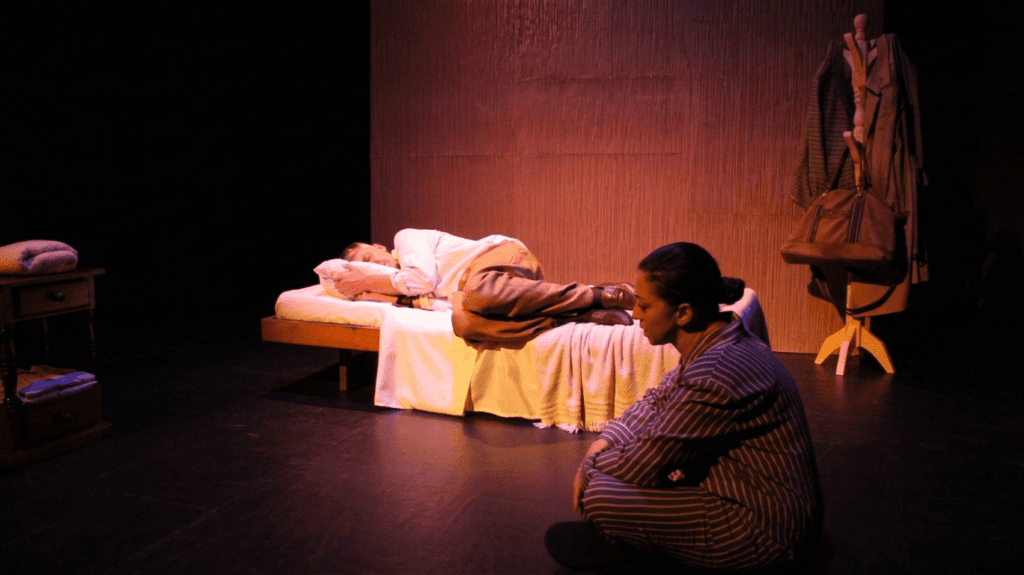
A fight between memory and reality
Walnut Wings It is, in essence, the representation of the power of falling in love even when everything indicates that the bond is doomed. With a minimalist scenery —designed by Humberto Rizzo and made by Juan Pensado—which enhances the contrast between the coldness of absence and the persistent heat of memorythe work invites the viewer to look at themselves in that uncomfortable mirror: that of loves that never end.
The Nut Ritual: A Fracture Analogy
The romantic poetry of the work revolves around a powerful image: he and his impossible love are like the two halves of a nut, designed to fit perfectly, but doomed to separation.
The genius of the setting lies in making that metaphor tangible. Before entering the room, a small sensory contract is established: the spectator receives a nut. That gesture is not decorative, it is conceptual. The external shell and its vulnerable interior mirror the dynamics of the characters.
By holding the fruit in their hand, the audience understands—even before the play begins—that what they are about to see is the story of a half that desperately searches for its equal in the void.
Buenos Aires: the sharp city that does not forgive
The work of Omar Tricarico It does not only occur in a house, but is deeply anchored in a Buenos Aires “sharp”. The city stops being a simple backdrop and becomes an active force, almost an invisible character that conditions every decision, every silence and every wound.
It is not the romantic Buenos Aires nor the nostalgic postcard: it is a harsh, fast-paced city that expels at its voracious pace. A city where love, far from being a refuge, becomes a risk. Zuné inhabits that tension. Outside, the city demands hardness, speed, forgetfulness. Inside, his world stops, thickens, fills with memories that do not circulate.
The Buenos Aires that the work proposes does not accompany the protagonist’s process: it contradicts him. It pushes him to continue when he still can’t, it forces him to inhabit a normality that is foreign to him. And in that contrast, loneliness becomes more acute, more visible.
Consciousness: the mirror of a broken man
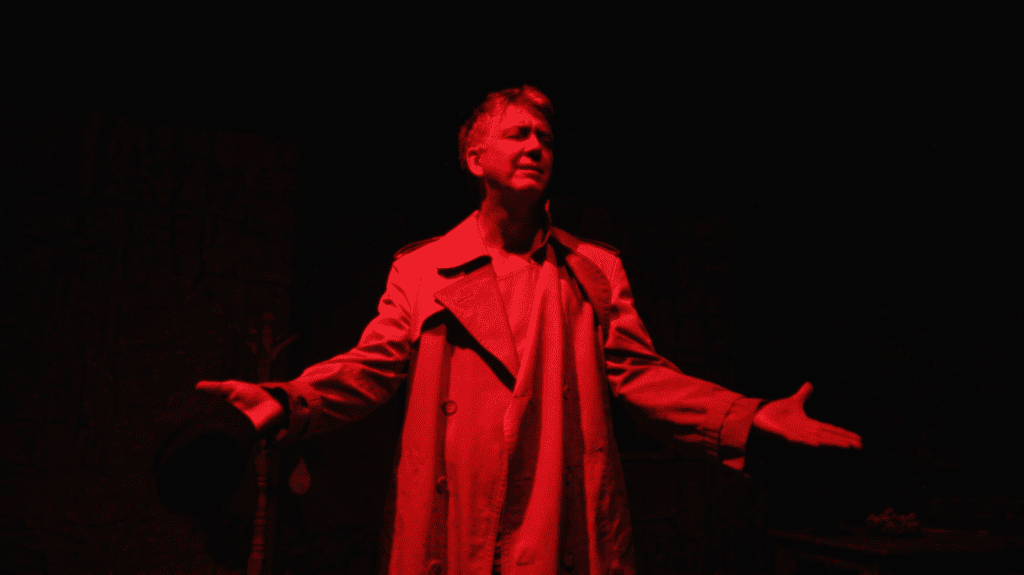
Your “she/him” is not just an internal voice, but a presence that insists, that bursts in, that refuses to disappear.
The interesting thing is that this awareness does not function as a guide or as relief. It doesn’t order: it messes up. It does not calm: it intensifies. It exposes Zuné in his deepest contradiction: wanting to let go and, at the same time, clinging to what is no longer there. In this back and forth, the work finds its most honest pulse.
He unfolding It not only reveals an emotional fracture, but also a tension of instinct and sensitivity: what appears as weakness in him, in his consciousness becomes expressive power. It is as if his capacity to love—and to hurt—needs to leave the body in order to be said. In this way, the work achieves something rare: turn introspection into dramatic action.
An invitation to inhabit the wound
Walnut Wings It does not look for easy answers or complacent closures. It is an intimate, uncomfortable and deeply human experience. It invites those who see it to go through their own fragments, to recognize those stories that, although finished, continue to beat.
Because ultimately, the work raises a question that remains echoing long after the lights go out:
What remains of us when love leaves… and what part decides to stay?
Features and location
Sala: The Foreigner Theater
Address: Valentín Gómez 3378, Capital Federal, Buenos Aires, Argentina
Web: http://www.teatroelextranjero.com
Technical Sheet:
They act: @mavy.yunes and @fabianlosadax 🎬 Address: @ese_nico 🎨 Scenography and Costumes: @humberto_rizzo 💡 Production: @ovilela99, @clautassano and @nico.ojeda.productor 🤝 Equipment: @carlaburon, @luiggimanuel, @nach.orrego, @_gastongallo 🏠 Sala: @teatroelextranjero ✨ Contents: @matchacontenidos