
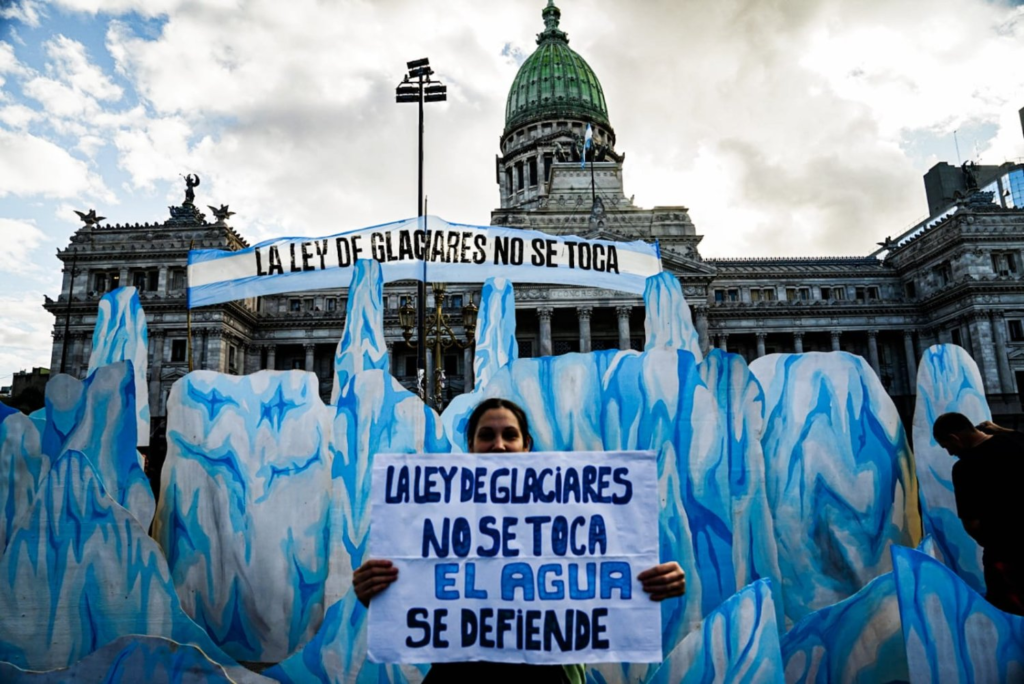
In a session that will remain marked in the country’s legislative history, the Chamber of Deputies turned this into law April 9, 2026 the modification of the Law of Minimum Budgets for the Preservation of Glaciers and the Periglacial Environment (Law 26,639). After months of intense debates between the productive sectors and environmental organizations, the new regulatory framework redefines which areas are protected and which are enabled for economic activity.
A little history: The milestone of 2010
To understand what was voted today, we must remember the origin of the Glacier Law original. Sanctioned in September 2010the Ley 26.639 It was a triumph for citizen assemblies and environmental groups.
- The 2008 veto: A previous project had already been approved, but was vetoed by then-president Cristina Fernández de Kirchner (the famous «Barrick Gold veto»), which generated unprecedented social mobilization.
- The 2010 consensus: Finally, a law was achieved that prohibited any industrial, mining or oil activity in glaciers and in the periglacial environment (frozen soil that acts as a water regulator).
- Decree 207/2011: One year later, the February 28, 2011the regulatory decree that made the law operational was signed. This step was fundamental because it designated the IANIGLA (institute dependent on CONICET) as the person in charge of carrying out the National Glacier Inventoryestablishing for the first time the technical rules to identify and protect each ice body in the country.
What is the periglacial environment and why is it the key to the conflict?
The original law not only protected large masses of white ice (glaciers), but also the periglacial environment: high mountain areas with frozen soils containing water.
Glaciers are natural «water tanks» that feed rivers in times of drought. They are vital for human consumption and agriculture in provinces such as Mendoza, San Juan and Chubut. The mining industry always questioned that the definition of «periglacial» was too broad and blocked projects in areas where there is no visible ice, but there is frozen ground.
The 2026 reform: What changed this week?
2 days ago the Undersecretary of the Environment released an official statement with its position and support for the reform of the law: Letter of support for the clarifying reform of the glacier law.
The modification approved today, Thursday, April 9, by the Chamber of Deputies introduces structural changes to the National Glacier Inventory and the protection criteria:
- Reduction of the protected area: The reform establishes that, to be protected, a glacier must have a minimum size and be «relevant as a water reserve.»
- Opening to the periglacial environment: Restrictions are relaxed in periglacial areas that do not have a direct and proven water function, which opens the door to mining and infrastructure projects that were previously prohibited.
- Application Authority: Greater weight is given to the provinces to decide on the environmental impact on their territories, a point that generated strong disagreements due to fear of less rigor in controls.
Impact and controversy
This Thursday’s vote showed a deep crack in Congress. While the sectors that supported the reform argue that it is necessary to attract mining investments (especially in lithium and copper) and generate employment, organizations like Greenpeace They warn of an «environmental regression without return.» The sectors that rejected the reform maintained that «Modifying the law is unprotecting our freshwater reserves in a context of global climate crisis».
Your voice for the Glaciers is the website where Greenpeace explains how changing the law It directly impacts the water security of more than 7 million Argentinians.
What’s next?
With final approval, the Executive Branch must regulate the new law. The focus will be on updating the National Glacier Inventorywhich will determine on the map which are the new areas where the machines can begin to operate.
The reform of this law puts us before a fundamental ethical question: What are we willing to sacrifice for immediate economic growth? Glaciers are not just postcard landscapes or tourist sites; They are ecosystems that do not have the capacity to «regenerate» in human time once they are intervened or contaminated.
In a context of global climate crisis, where droughts are increasingly frequent and prolonged, unprotecting our strategic freshwater reserves is a very high-risk bet. The loss of a glacier is not measured only in hectares of ice, but in the water security of future generations. Privileging extractivism over the conservation of life sources forces us to ask ourselves if the development we seek today is not, in reality, an environmental debt that our children will pay tomorrow.
See more news in the ViveLaPlata’s Instagram and in our website.
From Live digital multimedia communication and websites of key cities in Argentina and the world; We disseminate and promote authors and other indistinct means of communication. We also generate our own journalistic creations and investigations for the service of readers.
We suggest reading the source and expanding with the link above to access the origin of the note.

