

In a context where efficiency stopped being an option and became the rule, Argentine architecture is undergoing a profound transformation. It is no longer just about building square meters: today the focus is on designing life experiences.
The new homes do not seek to impose themselves from the ostentatious, but from the essential. Noble materials, strategic decisions and a more conscious relationship with the environment define a new paradigm: that of smart luxury.
From within us, we are carrying out a series of eInterviews with studies that are leading the way in this change. We are interested in knowing their perspective, their way of projecting and the resources they consider key today in Argentina.
Raw aesthetics: the value of the essential
In a scenario where architecture becomes increasingly sensitive to the user, understanding what those who design a home are looking for today is key.
- What are your clients looking for most today when planning a house?
It depends on each client and their way of life, but there is something that is recurring: they want a unique, different place that contains them and they can live as their own. Not in the decorative sense, but in the more physical and emotional sense of the term.
The functionality is no longer discussed. What really mobilizes those who invest in a reform today is the search for a space that gives them back something that the daily rhythm took away from them: calm, order, their own identity.
The idea of “high-end” is also under review, leaving behind certain traditional concepts linked to material luxury.
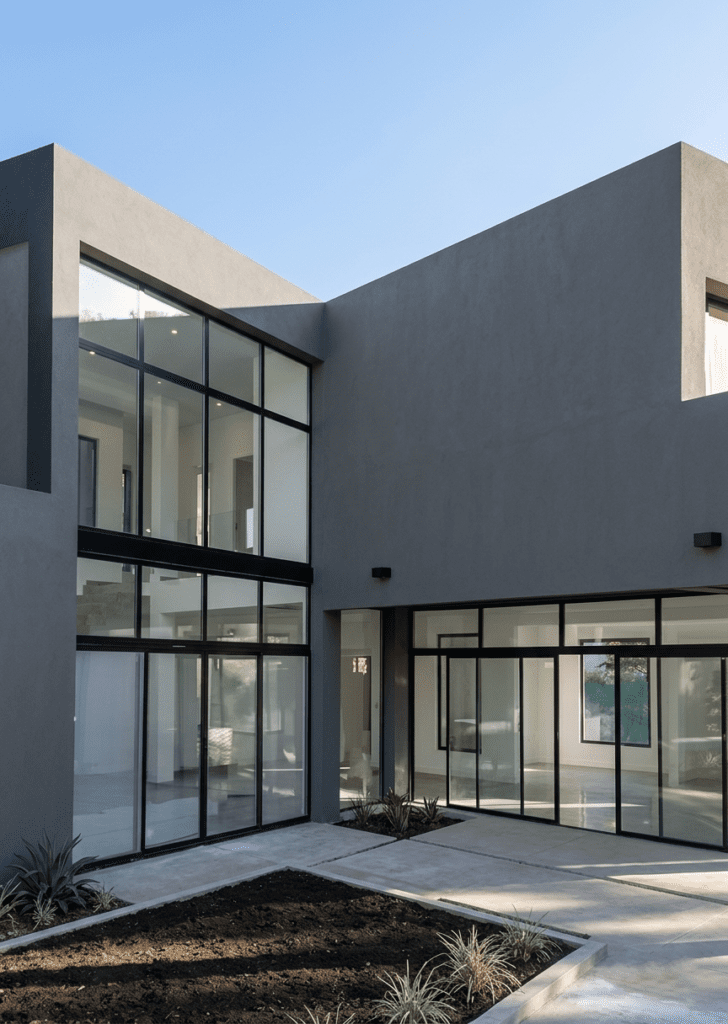
- From your point of view, what defines a “high-end” house today?
This question seems to me to be one of the most interesting and one of the ones that generates the most confusion. For a long time, “High-end” was synonymous with imported materials, marble countertops and brand-name faucets.
Today that equation is obsolete. There are those who still consider that a high-end home is made up of excessively expensive elements, but Lately, luxury is more related to spaces, patios or lighting. In existing houses, PHs or apartments, creating these spaces is more valuable than a gold faucet. It is also important to create a home that appears more spacious through strategic interventions, accompanied by noble materials that complement the design.
Luxury today involves the spatial, not the material.
- If you had to choose one key element that elevates a project, what would it be and why?
Natural light, without hesitation, used as a basic design tool.
The same project, with different light management, can result in a space that makes you relax as soon as you enter. It is an element very ignored by many clients who consult us, and when they discover that you can open a window, a skylight or use other materials, another world appears, other sensations.
Dry construction and new ways of living
Innovation in construction systems also redefines the times and possibilities of the project.
We see that dry construction is booming.
- What are, from your experience, the real benefits compared to the traditional system?
The benefit is concrete: shorter work time. Once the base structure is in place, dry construction allows progress to be made quickly and easily. At the same time, there is the possibility of not depending exclusively on highly specialized labor, unlike the knowledge acquired over years by skilled bricklayers.
That said, it is not a miracle system. Although it does not require the same level of traditional craftsmanship, it is necessary to have the ability to resolve details. Placing a profile incorrectly, not respecting placement methods or skimping on materials or thickness can cause problems in the future..
Furthermore, in Argentina traditional construction continues to give that feeling of eternity, of betting on the “brick”, something that is difficult to eradicate.
- How do these systems impact costs, times and thermal comfort?
In times, the impact is clear: A well-planned dry site can reduce deadlines by more than half compared to traditional construction.
In terms of costs, it is more complex. It will depend on the level of comfort and the materials. The costs may be higher, but there is savings in labor. The challenge is the investment flow: it is necessary to have a lot of material on site from the beginning, which implies a greater outlay compared to traditional systems, where spending is more progressive.
In thermal comfort, well executed and with adequate insulation, it is very efficient. The fault is usually in the thermal bridges: if they are not resolved correctly, performance is lost. Even so, with less thickness, greater technical comfort can be achieved compared to masonry.
Design strategy: where to invest and where to optimize
In a challenging economic context, a key question arises: how to achieve quality and design without excessive budgets. Today, luxury seems to be more linked to smart decisions than expensive materials.
- In what aspects of a project do you recommend investing to achieve an efficient house with a high aesthetic perception?
For a house to be efficient, the fundamental thing is labor. It seems obvious, but many times it saves money on whoever executes the tasks, instead of looking for other alternatives, they will be surprised at how inefficient an installation or insulation becomes if it was poorly executed.
If you are looking for a high aesthetic perception, I recommend investing in a good architecture studio, aesthetics is a personal perception and if it is not correctly interpreted, it can lead to ambiguities or definitions that are not entirely to your liking.
- Where do you think it can be optimized without affecting the final result?
In the endings, or at least in the definition of them. Any definition that is not correctly defined before starting any work generates a bottleneck in the future and can lead to unforeseen times and extra costs. It is also optimized by planning, anticipating ahead of time, buying in quantityetc. In construction, planning and looking for detours is the best form of optimization that exists.
- What common mistakes do you see in those who seek to “cut costs”?
In addition to labor, skimping on materials is a very common mistake. It is one of the biggest mistakes we usually face. When purchasing materials from recognized factories you have support and in the event of any technical inconvenience the brands usually respond in a good way.while a generic manufacturer does not have the same guarantees or certainties.
Trends 2026: materials, styles and well-being
The current design combines minimalism, warmth and connection with nature. Styles like Japandi, adapted to the local style, are beginning to appear strongly. Added to this is the biophilic design, which incorporates light, ventilation and vegetation as an essential part of living.
- What are the materials or textures that, for you, define current aesthetics?
It depends on each style and person, but currently there is a trend towards clear and harmonious materialsaccompanied by more rounded and organic shapes.
Materials such as terrazzo, light wood or any element that provides luminosity and purity They are very present.
- The local context also influences what is coming. What trends do you see consolidating in the coming years in Argentina?
Argentina is going through a double process: crisis in construction and opening of imports.
Faced with this, we believe that the most logical scenario is a materials optimizationboth economical and imported, along with the continuity of traditional constructions adapted to new needs.
Beyond the trends, there is an axis that remains constant.
- What role does well-being (light, air, nature) play in your projects?
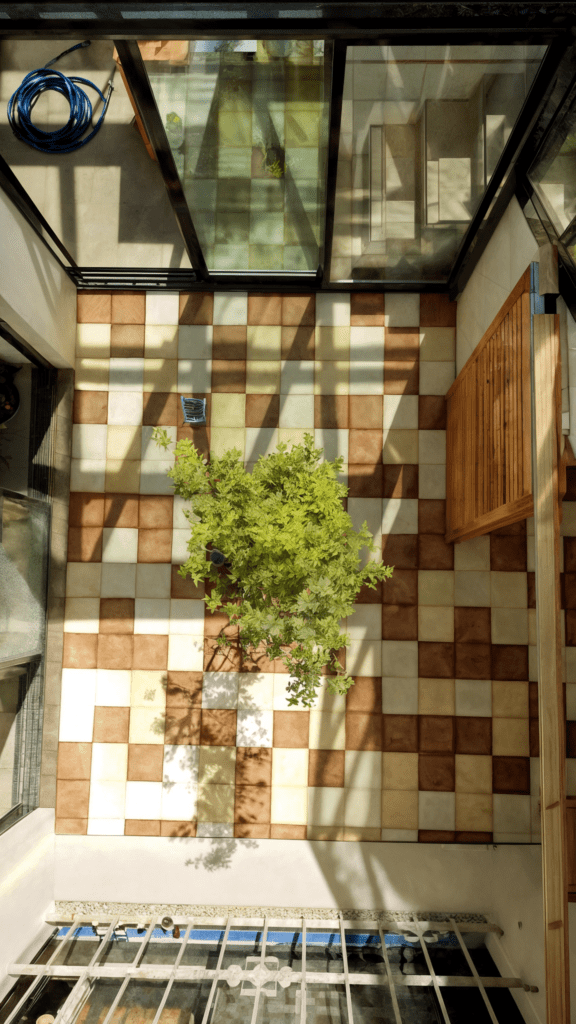
It is the central core of our way of designing. In our first work we took a patio that contributed nothing and transformed it into the focal point of the house, the beacon of light for the entire home. From that moment we understood that Lighting, ventilation and nature must be protagonists in all our projects.
Projects: when theory becomes space
That look is translated into concrete works that reflect this way of projecting.
JF House
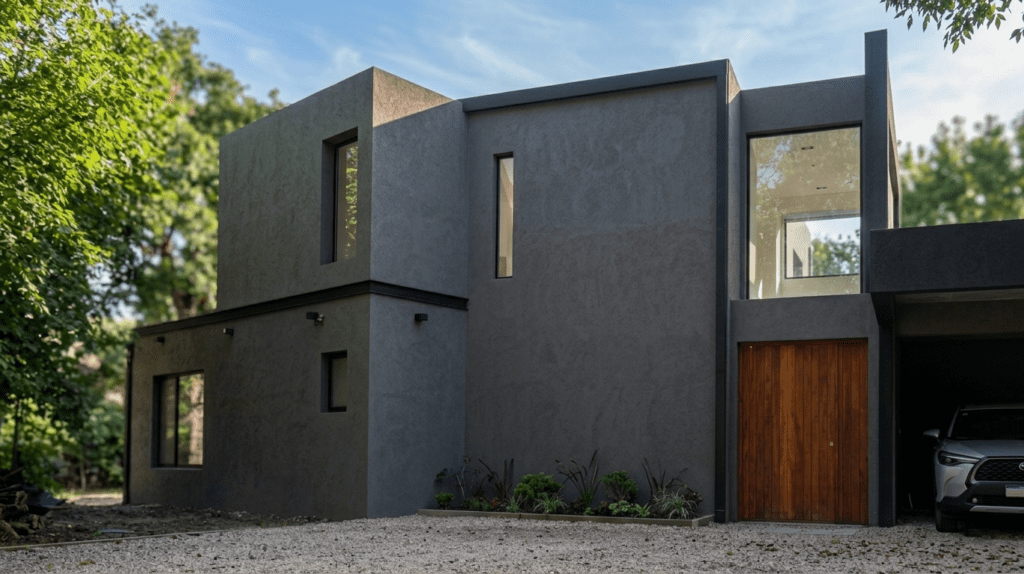
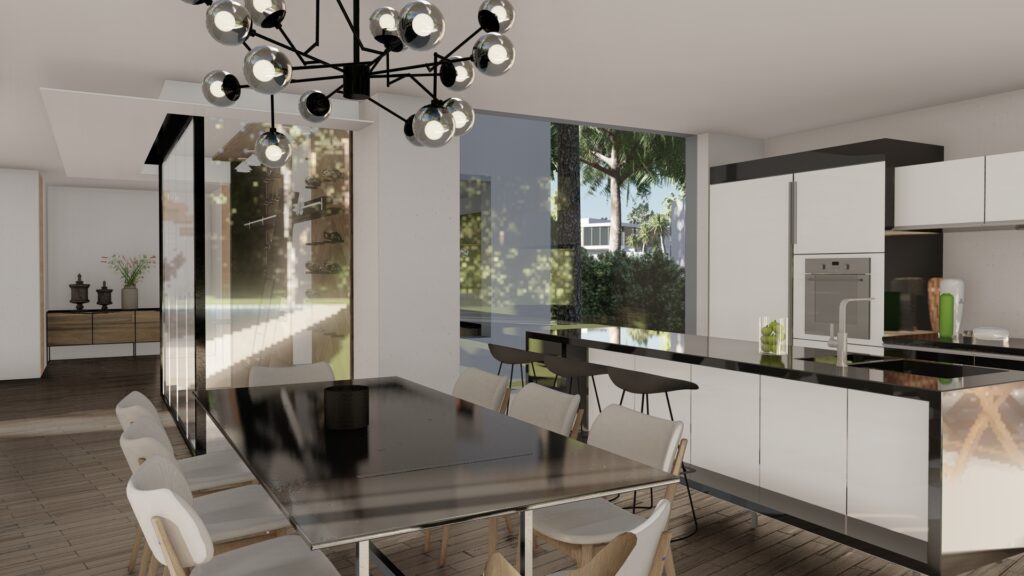
The guiding idea of the project born from the existing afforestation of the property, seeking to generate the feeling that the house is in the middle of the forest. The leitmotiv is to recreate that experience, using materials and situations where the boundary between interior and exterior becomes blurred. With small operations and a study of sunlight, a completely interior was achieved. bright, open, where walls appear only when they are strictly necessary.
AFTE House
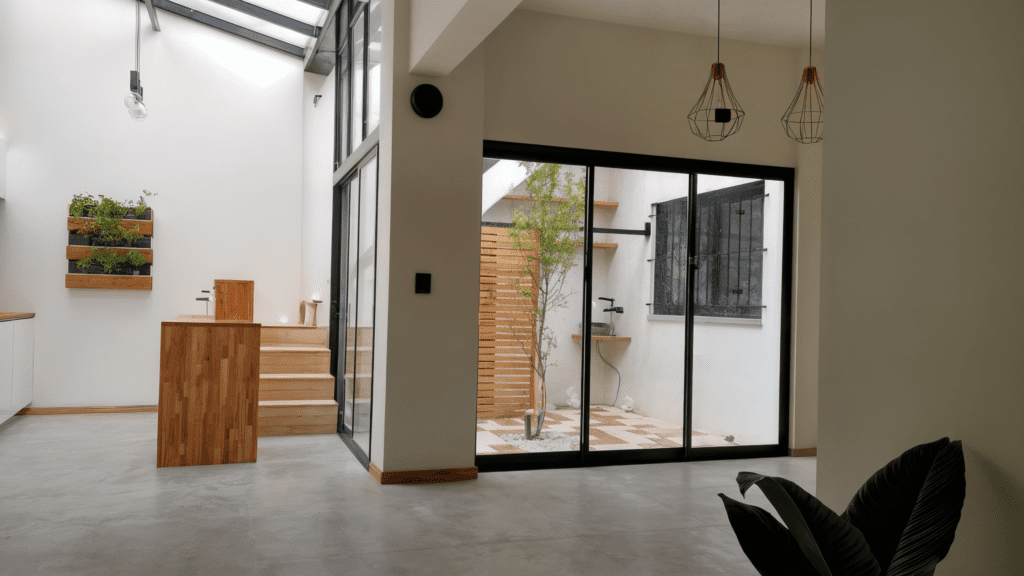
The remodeling is born before a couple’s need to move to a larger home, with the spice of being the childhood home of one of them. The aim was to generate a feeling of greater spaciousness based on a key element:the lighting and the use of the patio as a focal point. The main rooms were unified and the patio was enhanced by large openings and a glazed enclosure with DVH. The result is a house where the patio becomes the nerve center, expanding the spaces and providing light even on cloudy days.
Architecture and technology
Technology appears, but still with some resistance.
- What importance do you give to home automation in your current projects?
Demand is limited, mainly due to fear of supply cuts and lack of dissemination. We think it’s important and we try to incorporate innovations wherever possible, but there is still some resistance.
- Do you think smart homes are already a necessity or are they still a differential?
It depends. It is necessary to start thinking about incorporating technological elements for a rational use of resources, together with the economic benefit that this entails. Today it is possible to install a device that, through Wi-Fi, can control air conditioners, electric water heaters, curtains, lights, etc. All remotely, generating a significant reduction in expenses, taking into account current consumption, especially in 100% electric homes.
I think Argentina is very far from exploiting this technologydue to implementation costs and lack of security in maintenance. If the power goes out four times a month in summer, having your home smart is not something that keeps the average Argentine awake at night.
As a preview, the studio is close to launching the book “Undressing Architecture”, where they seek to show behind the scenes of professional work and its multiple dimensions.
Contact
Web: SingularArg
Instagram: @singular.arquitectura