

In Vive la Plata, because it is Women’s Month, we decided to hold daily commemorations throughout March to the women of La Plata who marked our history with a significant impact at a regional, national or global level. Today, as it is the last day of the month, we want to remember the direct victims and protagonists of the last civil-military dictatorship that our country went through: the missing women of La Plata. 50 years after the Coup, informing ourselves about their struggle and understanding their stories is our responsibility as people of La Plata to keep the Memory alive.
The objective of this note is to give visibility to a group that suffered the most atrocious acts of violence in the darkest era of the country: our symbols of young resistance, some of the La Plata women who disappeared and were murdered in the last civil-military dictatorship. According to official data from the National Report on Disappearance of Persons33% of those disappeared between 1976 and 1983 were women, and 10% of them were pregnant.
Victoria Alvarezresearcher of CONICETexplained in one of his reports the relationship between dictators and the female body. He explained that «the conception that the perpetrators had of the kidnapped women is that they were women who departed from the patriarchal morality that they valued, that they believed was in danger and that they intended to reinforce.»
Many missing women had active roles in society; They were active activists of different political parties, teachers, students and professionals. It could be said that they «went outside» of stereotypical gender roles: they were more than housewives or mothers. In our society, there is a debt to understand the dictatorship and its impact also from a gender perspective. For that, Memories and social frameworks of listening about the sexual violence of State terrorism It is a recommended reading, where the aforementioned researcher, Victoria Álvarez, analyzes real testimonies and, based on them, reflects on «the Argentine concentration camp experience from a gender perspective.»
The presence of the National University of La Plata (UNLP) explains why La Plata was one of the metropolitan areas most affected by the military violence of the time. As in other student cities, the majority of missing persons belonged to the institution, and because it is the capital of its province, there was always a lot of political presence and student militancy.
Below, we share some names and stories of La Plata women murdered and disappeared in the last dictatorship so that, 50 years later, the Memory of their life stories and struggle does not wear out.
María Clara Ciocchini (1958-1976)
María Clara was a student activist and one of the victims of the so-called «Night of the Pencils». Although she was born in Bahía Blanca, her figure is closely linked to La Plata, where she developed her activism and where she was kidnapped by the repressive forces of the last military dictatorship.
Before moving to La Plata, María Clara had an active participation in the Scouts of Argentina in Bahía Blanca, becoming a guide for the Guide Community No. 1. His vocation for service was transformed into political militancy when he moved to our city, where he enrolled in the Baccalaureate of Fine Arts of the UNLP: there, he joined the Union of Secondary Students (UES). From that space, he actively participated in the demands for the Secondary Student Ticket and in literacy tasks in peripheral neighborhoods, linking art and education with social justice.
At the age of 18, María Clara was kidnapped during the early hours of September 16, 1976 at the home on 56th Street, where she lived with her fellow militant. Maria Claudia Falcone. Both were initially taken to the clandestine detention center known as «Arana» and then to the «Pozo de Banfield.»
According to testimonies from survivors, such as that of Pablo Díaz, María Clara maintained her integrity despite the torture. It has remained missing since then, becoming a symbol of youth resistance against state terrorism.
Maria Claudia Falcone (1960-1976)
María Claudia was born in La Plata, in a family with a strong political tradition, and studied at the Baccalaureate of Fine Arts from the National University of La Plata (UNLP). There began his militancy in the Union of Secondary Students (UES)where he quickly stood out for his organizational skills and social commitment.
Despite his young age, he actively participated in literacy and health support tasks in vulnerable neighborhoods, such as Villa Arguello. Claudia did not want her fight to be limited to the classrooms; It sought to link the right to education with the needs of the most abandoned sectors of the region.
In September 1975, María Claudia was one of the main promoters of the mobilizations to achieve the Secondary Student Ticket before the Ministry of Public Works. This claim put her in the crosshairs of the repressive forces, along with her colleagues from the UES.
He September 16, 1976At the age of 16, she was kidnapped from her aunt’s apartment on 56th Street, along with her friend and fellow activist. Maria Clara Ciocchini. According to testimonies from survivors, both passed through the clandestine detention centers of «Arana» and «Pozo de Banfield.» She remains missing, and like her friend and companion Clara, she became a symbol of youth resistance against state terrorism.
Ana Teresa Diego (1954-1976)
Ana Teresa Diego was born in Bahía Blanca, but moved to La Plata to follow her scientific vocation. She was an outstanding student at the Faculty of Astronomical and Geophysical Sciences (the historic Observatory). At the same time, he developed an active militancy in the Communist Youth Federation (FJC)where he participated in political and social debates of the time.
He September 30, 1976At the age of 22, Ana Teresa was kidnapped by repressive forces when leaving the Observatory, in the Bosque de la Plata area. According to survivors’ testimonies, she was seen in the clandestine detention centers «Pozo de Quilmes» and «Brigada de Avellaneda.» For decades it remained missing, becoming a symbol of persecuted students of exact sciences.
In the year 2012the Argentine Forensic Anthropology Team (EAAF) managed to identify his remains, which had been buried as «NN» in the Avellaneda Cemetery. This discovery allowed his family and the academic community to close a search cycle and give him an official burial.
The International Astronomical Union accepted the proposal to baptize the Asteroid 11441 with the name of «An Diego» in his honor. It was the first time that a celestial body was named after a person missing due to state terrorism. The initiative was promoted by his own colleagues and teachers at the La Plata Observatory, as a way to make his presence in science permanent.
Diana Teruggi (1950-1976)
Diana Esmeralda Teruggi was born in La Plata, attended secondary school at the Liceo Víctor Mercante and then entered the Letters degree at the UNLP. During her youth, she began active activism in the Montoneros organization, where she was known as «Didi.»
She married Daniel Mariani, also a militant, with whom she had her daughter, Clara Anahí, in August 1976. The family lived in the house on 30th Street between 55 and 56 in La Plata, a place that also functioned as a clandestine printing press for the magazine Evita Montonera.
On November 24, 1976, his home was the target of a violent joint operation by the armed forces and police (under the command of Ramón Camps and Miguel Etchecolatz). The house was attacked with heavy artillery for hours. Diana Teruggi was murdered on the spot along with four other fellow militants.
His daughter, Clara Anahí, who was three months old at the time, was kidnapped during the operation and disappeared. This fact began the tireless search for his grandmother, «Chicha» Mariani, one of the founders of Abuelas de Plaza de Mayo.
Today, the house on 30th Street is preserved as it was after the attack, with bullet holes and visible holes. It works like the Mariani-Teruggi House Museuma Site of Memory that bears witness to State terrorism in the city and preserves the story of Diana as a symbol of the resistance and militant commitment of the 70s.
Irma Zucchi (1918-1976)
Irma Zucchi was a prominent surgeon, obstetrician and university professor. His career marked a milestone in the history of the UNLP Faculty of Medical Sciencesby becoming the first woman to reach the position of full professor in a Chair of Surgery at that institution.
Zucchi developed extensive work in the field of public health and the training of professionals in La Plata. He specialized in gynecology and obstetrics, areas where he established himself as a technical and academic reference. At the UNLP, he held the chair of Obstetricswhere he stood out for his technical capacity and his commitment to the ethical training of future doctors. Her prestige led her to occupy positions of relevance at a time when the academic hierarchies in medicine were composed almost exclusively of men.
He November 12, 1976During the last military dictatorship, Irma Zucchi was kidnapped from her home in La Plata. He was 58 years old at the time of his disappearance. Despite his career and recognition in the scientific field, he was a victim of the systematic plan of repression that affected the university community of La Plata. According to subsequent investigations and testimonies, his disappearance occurred within the framework of the purges and persecutions suffered by the teaching staff of the Faculty of Medicine in those years.
In 2018, in an act of institutional reparation, the National University of La Plata delivered the repaired file by Irma Zucchi. This document stated that the cessation of her teaching activity was not due to administrative reasons, but rather to her status as a detained-disappeared person by the State.
Today, his name is remembered in medical classrooms as a symbol of professional excellence and the irreparable loss that the coup d’état meant for science and higher education in the region.
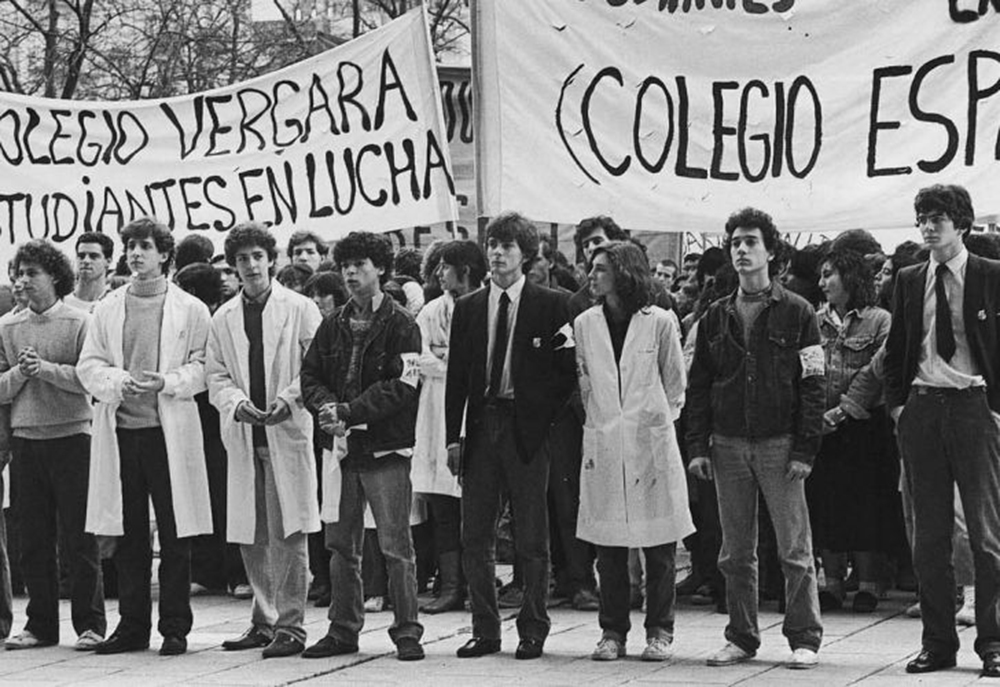
Although the month of March comes to an end today, it is our commitment, as communicators and citizens, to keep the Memory alive for the rest of the year: the anniversary of the 50 years of the last Coup has to keep us awake, and the fight to defend the rights won is still underway.
50 years ago, dictators and repressors took from the country a beautiful youth who thought and projected a freer, fairer and more sovereign country. Today, the ideals of the more than 30,000 missing men and women are more alive than ever.
See more news in the ViveLaPlata’s Instagram and in our website.