

January 16, 2026
Why the “Abundance” and “Stuck” Crowd Are Off the Mark
Don’t blame the housing crisis on local NIMBYism and too many regulations.
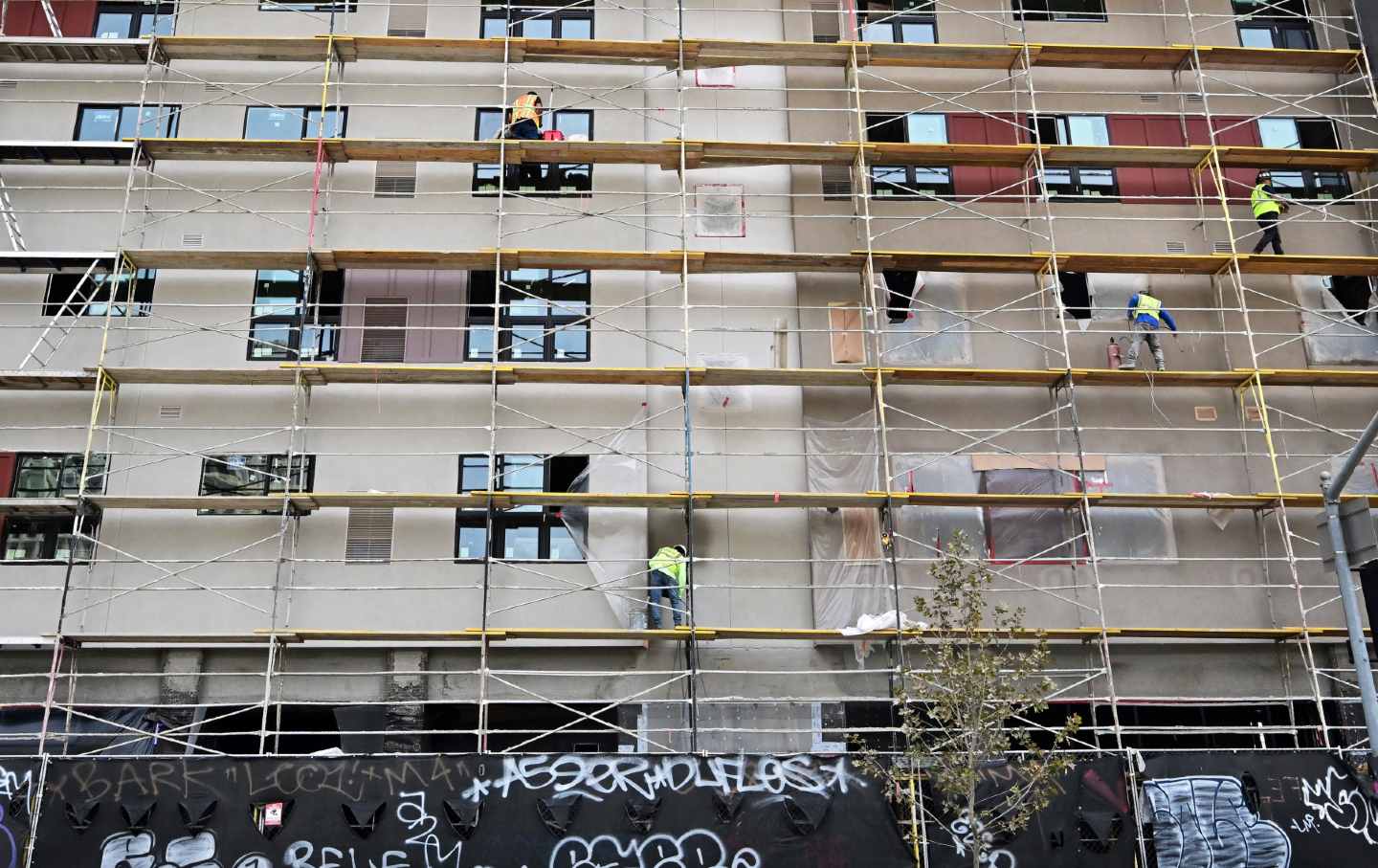
The Abundance and Stuck crowd are off the mark. The two books with those names would blame the country’s housing crisis on local NIMBYism (“not in my backyard!”) and too many government regulations. Enough new housing, they argue, is not getting built because local residents have gained too much power to obstruct and too many layers of regulations have either stopped or prolonged the building process.
They are both wrong.
They are wrong because of what they choose to ignore—overwhelming and increasing ownership of everything, including local housing, by private equity. They are also wrong because of the successful, years‑in‑the‑making developer narrative that if builders are simply allowed to do what they do best—build, build, build—the problems will be solved. And they are wrong because they are unaware of how many good things have come, and how many bad things have been defeated, by NIMBYs.
The private‑equity challenge has long been a topic of nationwide concern. Hospitals, nursing homes, daycare programs, local utilities, manufacturing companies, newspapers—even bus depots—have all been targets of private‑equity buyouts in recent years. While private‑equity partners cash in and pay a lower tax rate than the rest of us, local services and products plummet in quality and mushroom in cost. But private equity is also buying up new homes and old ones everywhere. Rising rents, higher sale prices, and lower maintenance follow. This puts available and affordable homes out of reach of individual buyers. Bozeman, Montana; Burlington, Vermont; Charlotte, North Carolina; New York City; and many more places are feeling the impact of spreading private‑equity ownership of formerly affordable housing.
Neither Abundance, by Ezra Klein and Derek Thompson, nor Stuck, by Yoni Appelbaum, even mentions the impact of private equity. (In January, Trump acknowledged the problem by calling for Congress to stop Wall Street firms from buying single‑family homes. But private equity has filled too many campaign coffers for that to happen. Localities, instead, are looking for ways to block some sales through tax and other measures. That has a better chance.)
To read these books is to be told that NIMBYism and government red tape are the cause of the nation’s shrinking affordable‑housing market. But before shining a needed spotlight on private equity, one might ask: Would you want a stream of trucks with contaminated contents noisily zooming by your house if you lived near the oversized AI‑generator site proposed near you? Would you like a 30‑story luxury condominium rising in the midst of your modest‑scale neighborhood of mixed incomes and varied backgrounds? Would you like high‑frequency power towers in your backyard so that some large‑scale power company can generate power near you but send it across numerous states to a distant community? Or would you like access to the new homes being built in your community that are being bought up by private equity before you can make a reasonable bid?
Current Issue

If you opposed any of those options, you are a certified NIMBY. Shame on you. It is almost heretical to ask why all these mammoth projects have to be so big. It is equally heretical to suggest that even if it is not cost‑effective for companies, why smaller facilities can’t be built closer to actual users. In one scenario, local communities subsidize the savings of big corporations; in the other, corporations and their shareholders pay more and local livability is not sacrificed.
Private equity has been around for a long time. Names like Stephen Schwarzman of Blackstone, Leon Black of Apollo Global Management, and Henry Kravis of KKR are well known—especially for the placement of their names on cultural treasures they generously support. But few realize how private equity works: the job layoffs it invariably brings, the diminishing product quality of its acquisitions, and the lower tax rate these companies pay while your taxes rise.
Bad Company: Private Equity and the Death of the American Dream by Megan Greenwell has not received the attention that Abundance and Stuck have. But it should. The book is a revelation. She writes:
Private equity firms earn management fees, transaction fees, and monitoring fees that typical companies do not. They benefit from tax breaks.… They can sell a company’s assets and pocket the proceeds.… Even the company going out of business entirely can be lucrative for its private‑equity owner.
Beneficiaries of private‑equity investments include “university endowments, public pension funds, state‑owned investment funds, and ultra‑wealthy individuals,” which may account for the lack of concern about the industry’s inequities. And of course, election‑campaign coffers benefit too. But private equity’s increasing presence in the private home and individual apartment market remains little acknowledged. Its impact is not acknowledged at all by these well‑publicized new books. NIMBYism and government red tape are the designated culprits.
And yet, if you examine the facts on the ground in these debates, NIMBYs are more often right than wrong. After all, who knows better what is right for a community than the people who live there? Most residents are not against steady, normal change—only against the destabilizing impact of cataclysmic change. Surely the for‑profit developer, multinational corporation, or outsized power company has only its own interest at heart. When so‑called NIMBYs are part of the process, reasonable compromises can often be achieved.
Take, for example, the T‑Building in the Queens neighborhood of Kew Gardens. It took two defeated proposals before a successful mixed‑income housing plan emerged with enthusiastic community support. The first proposal converted the existing building to all public housing. The second proposed demolition. The third—reusing the existing structure for mixed use—was welcomed and achieved. It opened in 2022 with low‑, very‑low‑, and moderate‑income units, with no market‑rate apartments.
The building is the state‑owned 1937 Triboro Hospital for Tuberculosis, designed by John Russell Pope, architect of the Jefferson Memorial and the National Gallery of Art. The 10‑story Art Deco structure—with serpentine wings, continuous balconies, shaped aluminum windows, sun terraces, and elegant curves—was designed to maximize air and sunlight, believed curative for TB. It is not a designated city landmark.
Two hundred apartments—75 supportive, 75 low‑income affordable, and 50 moderate‑income—were created within the existing structure. Significant government subsidies were essential, just as they are for private developers. No existing affordable units were destroyed to build new ones, as happens all too often.
Successful NIMBY projects are everywhere. Local voices inevitably help shape outcomes that add housing without destroying affordability. But you won’t find this acknowledged in Abundance or Stuck—only examples that blame citizens and celebrate forlorn developers.
Popular
“swipe left below to view more authors”Swipe →
Few people truly understand how private equity works. “For decades,” Greenwell writes, “the industry has invented its own rules—pioneering workarounds to tax and disclosure laws, slipping through loopholes, so thoroughly disguising its tactics that they are often incomprehensible to observers and even employees of portfolio companies.” This fog keeps workers, customers, communities, and journalists in the dark, opening the way for misplaced blame on NIMBYs and red tape. The bigger story remains to be told.
Roberta Brandes Gratz
Roberta Brandes Gratz is an award-winning journalist, president of the Center for the Living City, and author of We’re Still Here Ya Bastards: How the People of New Orleans Rebuilt Their City (Nation Books).