
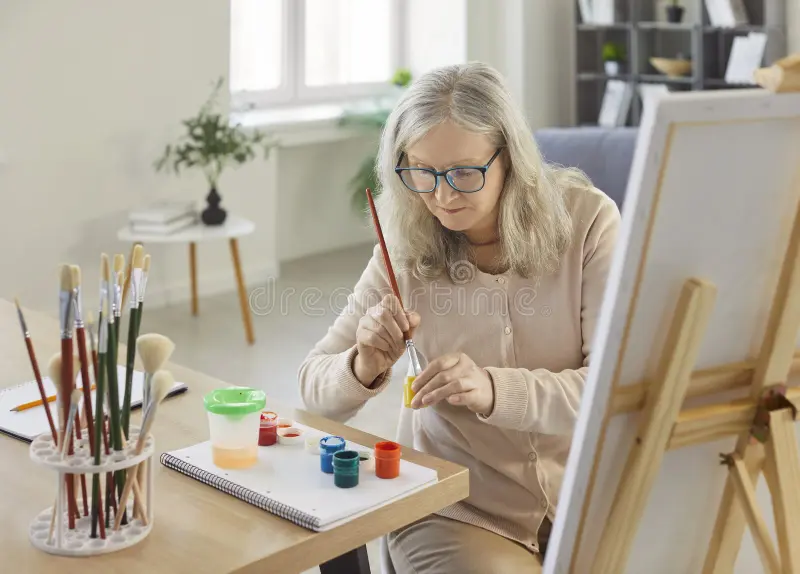
For years, many creative activities remained associated with childhood or moments of occasional leisure. However, a particular phenomenon began to grow: more and more adults are taking up hobbies that they had abandoned or discovering new spaces to develop personal interests outside of work.
When everyday obligations diminish, such as childcare or rigid schedules, many people find that the days seem to lengthen. In that context, activities that stimulate hands, memory and creativity They function as true training spaces for the mind: they help strengthen cognitive reserve, reduce isolation and expand well-being experiences. Ceramics classes, writing, painting, photography, weaving or cooking workshops appear more frequently on the urban cultural agenda. What could previously be seen as a minor hobby today begins to occupy an important place within wellness routines.

Personal time as a priority
The change is related to a broader transformation in the way we understand free time. Faced with demanding work days and a life increasingly filled with screens, many people look for activities that allow them disconnect from productive logic.
Hobbies offer just that: a space where the objective is not to perform or compete, but to experiment, learn and enjoy the process. In this context, manual or artistic activities began to regain value as forms of mental rest and personal expression.
Creativity without pressure
Unlike other more structured training areas, recreational workshops usually offer a flexible environment where error is part of learning. Painting without prior experience, writing without literary aspirations or learning ceramics without seeking a professional outlet became part of a new way of connecting with creativity.
For many adults, returning to these interests also means reconnect with curiosities that had been relegated by the responsibilities of everyday life.
Meeting spaces
In addition to the creative component, many of these spaces function as socializing places that allow sharing interests with people outside the work or family circle, something that is increasingly valued in urban dynamics.
In Buenos Aires, for example, there are independent spaces such as Romancewhich combine ceramics, jewelry and clothing molding workshops with a proposal designed for the meeting: the classes include moments of shared snacks and collective activities that encourage conversation and exchange between participants. In some cases, annual exhibitions are even organized where students can exhibit their pieces, transforming the creative process into a community experience.
More than a hobby
The return of hobbies does not necessarily point to productivity or the monetization of talent. For many people, it is simply recover time for activities that generate pleasure and well-being.
In a context where adult life is usually crossed by obligations and tight times, these spaces function as a necessary pause. It is not about returning to childhood, but about remembering that creativity can also have a place in everyday life.
Discover more from LatamNoticias
Subscribe to get the latest posts sent to your email.


