
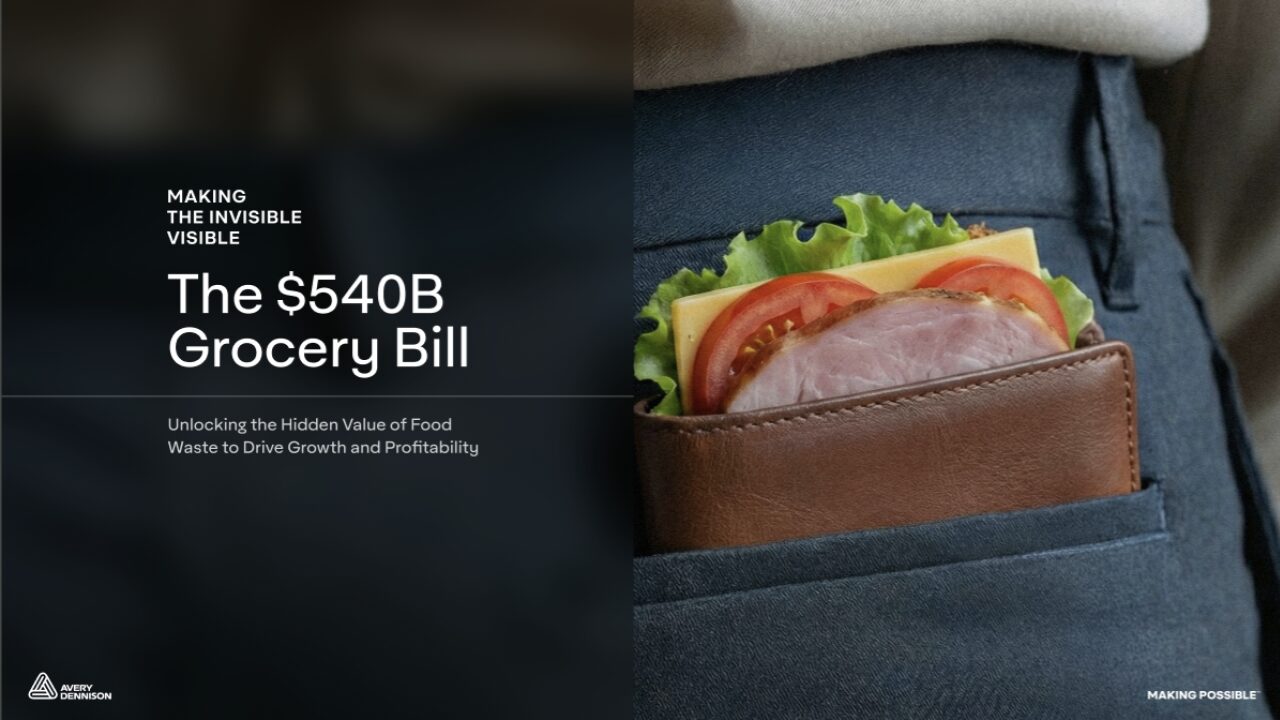
- Economists estimate that the cost of food waste along the supply chain — from farm to retail — is equivalent, on average, to 33% of companies’ total revenue. In Brazil, this rate is 32%.
- Lack of visibility compounds the problem: 61% of retail and supply chain leaders say they do not have a complete view of where waste occurs along the chain.
- Logistics and distribution continue to be the main critical points: 56% of respondents say they do not understand where waste occurs during food transportation.
- The meat market is the most challenging category and is projected to generate a cost of US$94 billion in 2026, almost a fifth of the total economic impact of food waste (US$540 billion).
- The 2025 holiday season highlighted the urgency to act: 67% of retail leaders say the waste generated by different types of meat will significantly affect margins.
MENTOR, OH — February 24, 2026 — Avery Dennison (NYSE: AVY) — As companies return from the 2025 holiday sales season, new data reveals that food waste continues to erode margins and establishes itself as one of the most costly — and still inconspicuous — challenges in the global retail supply chain.
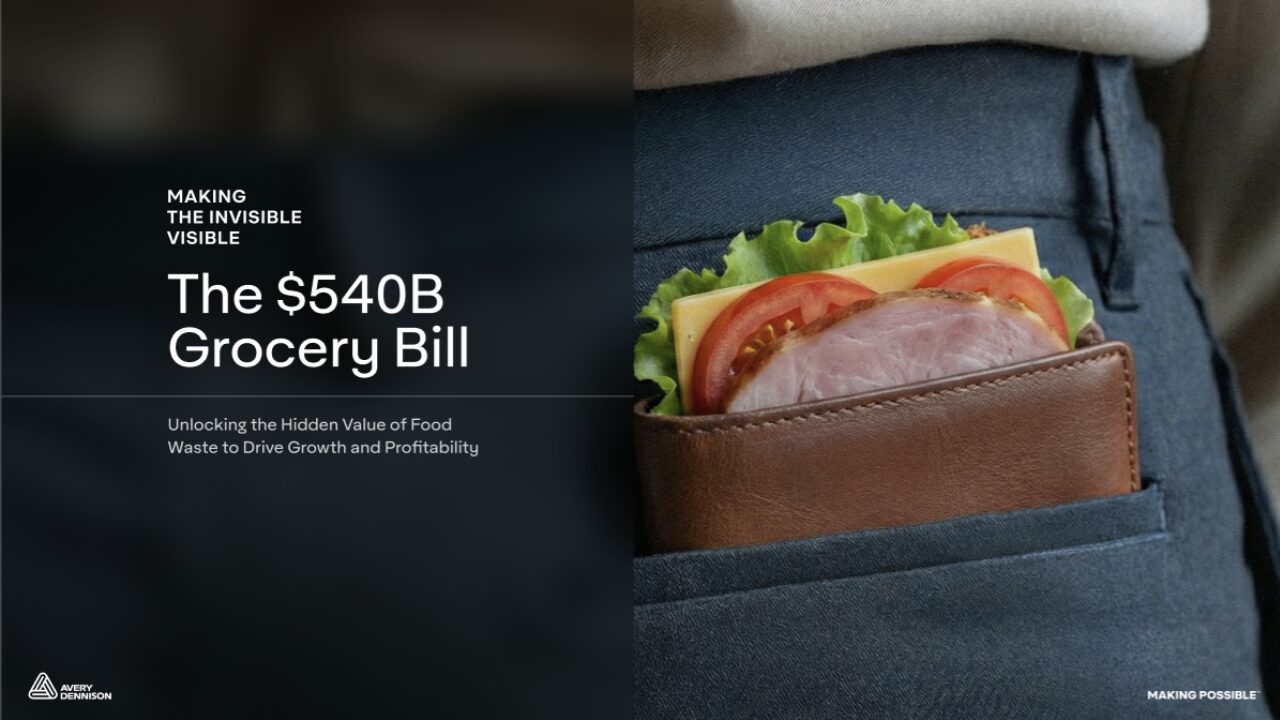
The information is part of the report Making the Invisible Visible: Unlocking the Hidden Value of Food Waste to Drive Growth and Profitability (Making the invisible visible: unlocking the hidden value of food waste to drive growth and profitability), published by Avery Dennison, a global materials science and digital identification solutions company.
Independent economic projections indicate that the cost of food waste along the global supply chain would reach US$540 billion in 2026, up from US$526 billion the previous year. Additionally, the study results show that, on average, the costs associated with food waste are equivalent to 33% of total annual revenue in the food retail supply chain, from harvest to point of sale. In Brazil, this percentage is 32%.
The research, which surveyed 3,500 food retailers and supply chain leaders around the world, reveals that, despite increased awareness, 61% of companies say they still do not have full visibility into where waste occurs in their operations. The limited ability to influence the points in the chain with the highest levels of loss is a recurring challenge, reinforcing the urgent need for focused innovation and collaboration between the different links in the chain.
The data shows that leaders face constant challenges at different points in the chain, especially in the perishable segment. When asked about the three most difficult categories to manage in terms of waste, 50% pointed to meat, 45% to fruits and vegetables, and 28% to baking products. More than half (51%) of business leaders indicated that inventory management and overstocking contribute significantly to waste within their operations.
Transportation emerges as a common factor between the different categories of perishables; 56% of companies say they do not have a clear understanding of how much waste occurs during the movement of products. Addressing this challenge requires a combination of solutions including item-level inventory visibility, demand forecasting, and real-time shelf-life management.
If current trends continue, the cumulative cost of food waste between 2025 and 2030 would reach US$3.4 trillion, coinciding with the 2030 deadline of the UN Sustainable Development Goal 12.3, which seeks to halve global food waste. Despite this objective, the report reveals that 27% of leaders consider that they will not be able to meet the goal within the established period.
For Julie Vargas, vice president and general manager of Enterprise Intelligent Labels Growth at Avery Dennison, food waste should no longer be treated as an unavoidable cost of retail. According to the executive, the combination of the lack of visibility throughout the supply chain and the low adoption of innovations has contributed to significant, often invisible, losses that directly impact companies’ margins. «The retail ecosystem is changing, but not all retailers are keeping pace. The biggest challenge is what we fail to see. From transportation to the shelf, blind spots are silently eroding margins. With the right innovation, it is possible to transform this loss into measurable value and reposition food waste: from an issue exclusively linked to sustainability to a critical business issue, capable of generating efficiency and growth throughout the chain.»
A high-cost challenge intensified by the holiday season
Meats stand out as one of the most difficult categories to manage. Nearly 72% of supply chain leaders point to this category as the top challenge. Due to its high unit cost in food retail, even small reductions in waste can generate significant financial gains. Independent economic projections indicate that meat waste would represent US$94 billion in losses in the global chain in 2026, almost a fifth of the year’s total economic impact; followed by fruits, vegetables and vegetables, with US$ 88 billion.
During the holiday season—retail’s peak sales period—Avery Dennison identified that 67% of companies expected meat waste to significantly impact their margins. Additionally, 69% said managing this issue during one of the busiest times of the year became an even greater operational concern than in previous years.
For retailers, factors such as economic volatility, the difficulty of quickly adapting to market changes and the challenge of responding to changes in consumer behavior exacerbate problems linked to food waste. In this context, 74% of respondents admit that inflation has made it more difficult to forecast demand for meat, while 73% report an increase in consumer demand for smaller portions or alternatives to meat.
«For a long time, food waste was treated almost exclusively as an environmental and social issue. It is essential to recognize it as the business opportunity it truly represents. More than seven in ten leaders say they see combating food waste as a true growth opportunity. The US$540 billion in lost value should serve as a clear call to action for the food retail supply chain to reduce losses and increase efficiency. Only by exploring the blind spots in the chain will it be possible to reduce waste, strengthen resilience and create lasting value for consumers. business and for the planet”, complements Michael Colarossi, VP and global sustainability leader at Avery Dennison.
Discover more from LatamNoticias
Subscribe to get the latest posts sent to your email.


