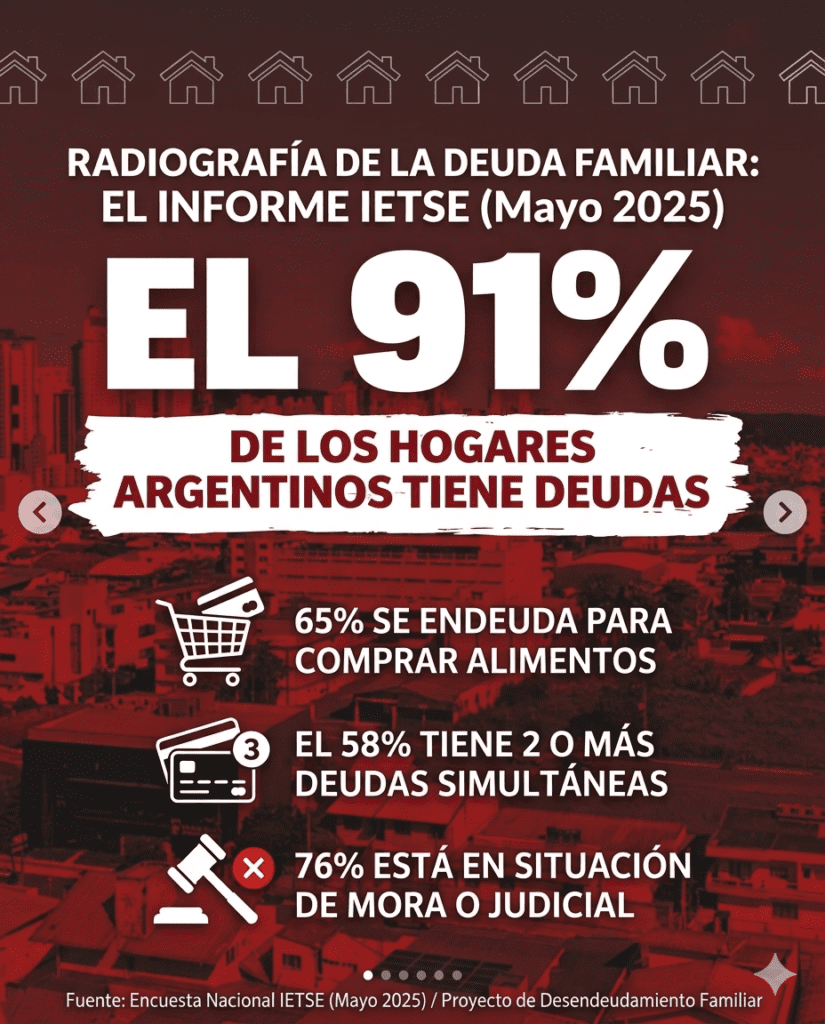
It is not a thermal sensation: it is the reality of the pocket. According to recent data from IETShe 91% of families in Argentina have some type of debt. What was once a resource to buy an appliance or plan a trip, today has become a survival strategy to make ends meet.
What are we getting into debt?
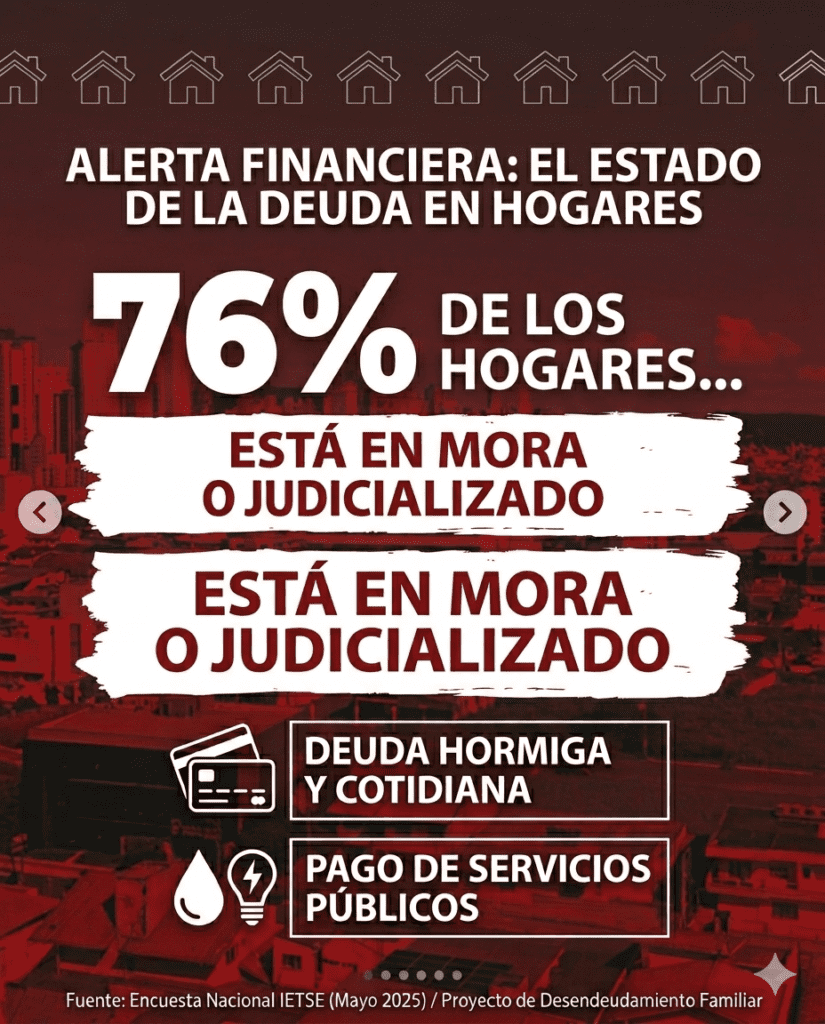
The note highlights a dangerous change in consumption. It’s no longer just about the durable goods credit card; The debt has become an «ant» and everyday:
Supermarket: Buy food in installments.
Services: Electricity, gas and water that are paid with interest.
Financial merry-go-round: The use of virtual wallets to pay the credit card statement, generating a snowball that is difficult to stop.
Key information: Between 2018 and 2025, virtual wallets added more than 5.5 million new debtorswith a level of irregularity (people who cannot pay) that is already bordering on 18%.
Los datos: Esa cifra sale de un informe nacional realizado por el IETSE (Instituto de Estadísticas y Tendencias Sociales y Económicas).
Survey technical sheet:
Who made it: The IETSE (linked in its surveys to the Córdoba Warehouse Center, but with national scope).
When it was done: May 2025.
Range: It was carried out in the 23 provinces of Argentina and the Autonomous City of Buenos Aires (CABA)with a sample of about 4,200 household surveys.
The central data: He 91,1% of Argentine households confirmed having some type of active debt.
What this “debt” is about:
The study clarifies that it is not debt for investment, but subsistence debt:
Card usage: He 58% He mainly uses it for shopping. food.
Multideudores: He 65% of households do not have a single debt, but between 2 and 3 financial commitments different at the same time.
Mora: He 76% of these debtors are in arrears or even in judicial proceedings, which explains why the bill speaks of «debt relief» and not just credits.
The Proposal: Family Debt Reduction
Faced with this scenario, a bill promoted by deputies from Union for the Homeland (like Lucía Cámpora and Julia Strada). What is it about?
Debt Reduction Program: Create mechanisms so that families can renegotiate their debts without being suffocated by interest.
Focus on basic consumption: Relieve the burden of those who went into debt to eat or pay for public services.
Criticism of the model: The project states that debt is not an «individual error», but a direct consequence of the fall in purchasing power and the increase in unemployment.
In January we presented the bill to create the Argentine Family Debt Reduction Program.
We proposed that retirees, workers, monotributistas and beneficiaries of social plans can access a direct line of credit from Anses to pay off their… pic.twitter.com/AXXLlNkmFW
If you feel that money is not enough and that you live «scrounging» payments, it is important to understand that it is a macroeconomic phenomenon. The discussion in Congress seeks for the State to intervene so that the cost of the crisis is not paid only by users with astronomical interest rates.
From Live digital multimedia communication and websites of key cities in Argentina and the world; We disseminate and promote authors and other indistinct means of communication. We also generate our own journalistic creations and investigations for the service of readers.
We suggest reading the source and expanding with the link above to access the origin of the note.
Desde Vive multimedio digital de comunicación y webs de ciudades claves de Argentina y el mundo; difundimos y potenciamos autores y otros medios indistintos de comunicación. Asimismo generamos nuestras propias creaciones e investigaciones periodísticas para el servicio de los lectores.
Sugerimos leer la fuente y ampliar con el link de arriba para acceder al origen de la nota.