

Q&A / June 1, 2026
A conversation with the historian Anton Jäger about political polarization, the stagnation of the West, the collapse of mass politics in the 20th century.
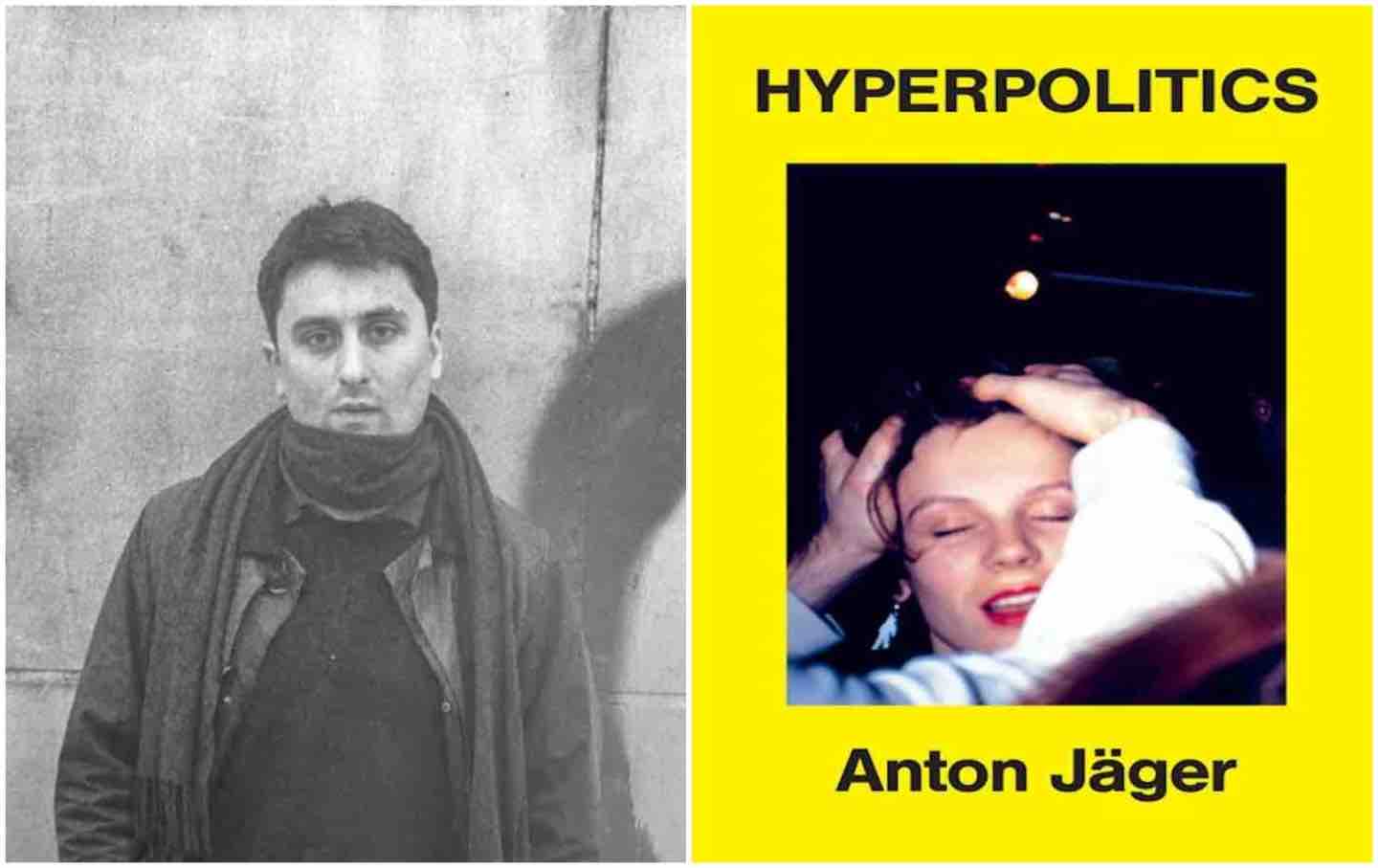
In his new book, Hyperpolitics, the historian Anton Jäger offers an explanation for why contemporary life has become so polarized, so riven with political conflict, yet nothing seems to materially change. His explanation traces the collapse of 20th-century mass politics, and in particular unions, parties, and civic institutions that once gave ordinary people real collective power. As these structures eroded from the 1970s onward, what emerged in their wake was something far more disorienting: a public sphere overflowing with moral urgency and viral outrage. Jäger calls this condition hyperpolitics: extreme politicization without political results.
The Nation spoke with Jäger about the idea of hyperpolitics, the historical context out of which it emerged, the intellectual influences that shape Jäger’s thought, and if we are now moving beyond hyperpolitics. This interview has been edited for length and clarity.
—Daniel Steinmetz-Jenkins
Daniel Steinmetz-Jenkins: What do you specifically mean by the notion of “hyperpolitics”?
Anton Jäger: The book examines a mutation in political culture of what Branko Milanovic has termed the “political West.” It opens with a contrast. In the 1990s and 2000s, talk in political philosophy was of “post-politics” and a general disinterest in public affairs. Such a diagnosis appears out of date today. In the past decade, political activity has witnessed a steady return across the West: voter turnout, protest activity, public violence, discursive involvement are all up. This naturally invites comparisons with previous periods of high politicization, mostly the 1930s. As the book shows, however, such a similarity is deceptive: In contrast to the “wild” mass politics of the 1920s and ’30s, today’s politicization rarely takes on a durably institutional form—the hyperpolitics discussed, then, stands for a process of repoliticization without reinstitutionalization. It is in no way a totalizing style or master concept, of course. Hyperpolitics denotes an important and relatively new gravitational pole in contemporary political culture; yet it is not the only tendency around.
DSJ: It seems like you are using it not just as a political concept but also to identify a particular historical moment.
Current Issue

AJ: Indeed, the book is very much a history of a change in political culture, not just a shift in electoral patterns or party competition. It is also not a moral condemnation or indictment. Instead, it is about a new structural transformation of the public sphere, as Habermas would have it, which affects actors across the spectrum. As mentioned, the hyperpolitics discussed in the book is born in contrast: with the post-politics of the long 1990s that preceded it, and the mass politics which characterizes the short 20th century. The latter was marked by a type of politicization that tended towards institutional forms. The 1990s instead mark a decline on two axes: institutionalization and politicization. As turnout at elections declines and strike activity slumped, associational life also enters a secular crisis. This double minus offers an interesting entry point to the sensibility of the 1990s: a period in which citizens retreat from the public sphere and politics undergoes a privatization. The very idea that one would publicly share one one’s voting preferences becomes outré; politics becomes the province of specialists or junkies. The idea of collective action is philosophically suspect. Again, I wouldn’t want to pretend to grasp the entirety of an epoch with the concept. “All theory is gray, green is the tree of life,” as Goethe once said. .
DSJ: So is this ultimately a book about populism?
AJ: It would be dishonest of me to deny continuity with previous work—originality and self-reinvention are all too demanding standards by which we judge intellectual work.
But I would make a distinction, which the book tries to parse too, between anti-politics, populism, and hyperpolitics. The year 2008, coinciding with the credit crunch, is the cutoff point for the repoliticization which the book registers in the last decade and a half. Yet the waves of politicization after 2008 in fact unfold in two distinct stages. First, there is the initial opening salvo of “anti-politics.” This mainly presents a challenge to the methods of crisis management after 2008, in which the Western political class is identified with a post-political stalemate. Such a criticism of post-politics can evolve into a questioning of representation itself, yet there is a fundamental ambiguity here. On the one hand, the slogan “They don’t represent us”—that of the Spanish Indignados—insists on a deficit of representation. On the other hand, it could also slide into a more radical position: “We don’t want to be represented.” Such a logic is patently visible in Occupy, and it reappears in the Gilets Jaunes.
This ambiguity was eagerly exploited by anti-politicians. From the mid-2010s onwards, however, we saw the emergence of movements which, while stemming from this anti-political matrix, adopted a more institutional horizon. Whether Beppe Grillo, Geert Wilders, Jean-Luc Mélenchon, or Jeremy Corbyn, each of these actors invoke “the people” and seek to build a representative link between a base and top through parties, electoral mechanisms, and forms of delegation. This necessarily invites evocations of an ideal of popular sovereignty—and therefore of representation, institutions, and structures.
Particularly on the left, such attempts also swiftly ran up against the complexities of institutionalization. Access to power proves less evident than expected, and the exercise of power even more restrictive. There are many examples—from Syriza to Podemos, via La France Insoumise—of movements which devise new forms of organization that are very different from the parties of the 20th century: digital parties, plebiscitary structures, blurred boundaries between leaders and activists. Mélenchon’s “gas-like party” and the very refusal of traditional legal registration are part of this logic. When we realize that entering formal politics is fraught with obstacles, the attraction of hyperpolitics becomes very strong. It does not presuppose any institutional horizon, any representation, any lasting structure. It allows for permanent spontaneity, without elections, without organizations, without long-term projections.
This is why I draw a clear line between anti-politics, populism, and hyperpolitics. The former still retains an institutional dimension, albeit a conflictual one; the latter is almost entirely free of it. Among the Gilets Jaunes, it is no longer just a question of saying “they don’t represent us”: Any claim to representation is suspect on principle; any attempt at a mandate immediately becomes illegitimate. This is a decisive difference.
DSJ: The two main intellectual influences behind your book are unexpected: the French novelist Michel Houellebecq and the French philosopher Jean Baudrillard. Why do they prove insightful for understanding hyperpolitics?
AJ: “Influences” would be too committal a description. I would say about Houellebecq what Lévi-Strauss said about Rousseau: It takes him two sentences to say what I can only express in five pages. Despite his uninspiring politics, he remains an immensely useful prism for the age. For Baudrillard, he seems to me one of the few figures from the late-century wave of French Theory whose grand anti-theory has, in fact, held up. I’m less interested in Baudrillard the thinker than Baudrillard the moralist, in the French tradition of Saint-Simon, Buffon, or Debord. All mix aristocratic, dandy-esque disdain for the US with a careful ethnographic interest in a society which is both so different and eerily similar to ours. This mixture of detachment and immersion is the main reason why they serve as lodestars for this book.
DSJ: In the attempt to understand the current authoritarian moment here in the US, many pundits, public intellectuals and historians look back to the crisis of democracy that Europe experienced between the World Wars, the party polarization that marked the Gilded Age and/or the failures of Reconstruction. What is your judgment of these historical comparisons given what you consider to be the unique nature of today’s hyperpolitics?
AJ: Humans are metaphorical animals—we can only make sense of our world by analogizing it to what we already know.
The argument to see the contemporary far right as “fascist’ here usually seems either genealogical or ideal-typical. On the one hand, explicit links and consanguinity between contemporary far-right figures and previous formations have been, pointed at, most visible in the Italian MSI and Meloni. On the other, the phenomenal similarities between far-right politics today and in the 20th century are also highlighted: a focus on exclusive citizenship, a highly monistic notion of democracy, a disregard for parliamentary power and focus on executives, suspension of liberal rights, and a conspirationist view of national decline that should be reversed by forcing a break with a stagnant liberalism.
This is compounded by a further difficulty: While the word “populist” is of only limited use when understanding the New Right, the term “fascist” proves equally constraining. In terms of the favoured ideologemes—from “great replacement” to other ethnonationalist fantasies—the continuity with the 20th century is hard to deny. Yet, in politics as in biology, the environment often proves as important as heredity, as historian Christopher Hill once noted, and contemporary fascists must contend with parameters incommensurate with those of their ancestors. These include demilitarization and the absence of a pre-revolutionary threat on the left, which were crucial in the line of interpretation pioneered by Dimitrov and extended by figures such as Neumann and Poulantzas after him. Yet, as Dylan Riley has noted, the peculiarity and the specificity of the far right become clear when contrasted with the fact that fascists were never able to retain any solid working-class support, a point of incessant frustration to many far-right cadres.
Giorgia Meloni’s party won an election in which nearly four out of 10 Italians stayed home, with turnout down by almost 10 percent from the country’s previous vote. In France, Marine Le Pen’s National Rally has long received its best tallies in regions that have the highest voter abstention rates—even with recent changes. In Poland, the Law and Justice party rules over a country where fewer than 1 percent of citizens are members of a political party. These are not mass affairs but rather exercises in orchestrated demobilization and passivity. As David Broder has noted on the Italian case, while “latest advance for a far-right party in the land of Fascism’s birth surely lends itself to evocative analogies,” this “does not mean that Mussolini’s heirs merely repeat the past in the present, or even that the fascist elements of their culture are always drawn from interwar Italy.” These indicate the deeply contemporary character of the Europe’s extreme-right surge.
What are better analogies? Rather than looking at the usual suspects in the 1930s or 1970s, the French philosopher Marcel Gauchet has recently made a daring countersuggestion: Look to the 1830s and 1840s, a paleo-industrial modernity far removed from the high modernism usually associated with the 20th century. This covers the advent of what Gauchet terms “the first crisis of liberalism” and the construction of a modern democratic imaginary, including the absence of institutions—political parties, above all—now mired in a deep crisis across the Western world. To the political philosopher, all the elements are there: an era of popular mobilization in which the subject of “the people” is the central point of reference, politics as the affair of professional notables, a political system lacking mass parties, and a public sphere in which public action is only weakly institutionalized except through conspiratorial societies. We have returned to that early post-revolutionary age, according to Gauchet.
Risks of anachronism aside, Gauchet’s suggestion is enticing—and holds potentially useful clues about the presumed post-liberal moment of the 2020s. Both on the left and the right, a stubborn attachment to 20th-century templates has obscured the possibility that our current age is better likened to less heroic ages of democracy and to a more primitive era of political development.
Another suitable analogy would be the period preceding the 1848 revolution, when protest was the dominant mode of political contestation and society remained thoroughly under-organized. There is a reason why Marx and Engels’ entitled their manifesto “The Manifesto for the Communist Party”—a call to channel radical energy into a specific organizational vessel. Yet even there are some major differences: The peasantry is no longer a majoritarian class the ancien régime is no longer with us; we are at the tail end, rather than the cusp, of the West’s Industrial Age. So maybe we’ll have to do our own thinking for ourselves in 2026, rather than rely on comforting templates.
DSJ: Given its slew of electoral successes, it seems as though the authoritarian right has adapted much quicker to hyperpolitics than its liberal and leftist opponents. Why is this?
AJ: There are two basic facts that bear repeating here. The right’s susceptibility to hyperpolitics is structurally lower than the left’s for two simple reasons. Firstly, a lower benchmark of political success, itself related to it being the Party of Order (as Marx termed it) which seeks to stabilise or preserve a set of social relations rather than overhaul it. Secondly and relatedly, an access to private donor funds which releases them from a dependence on membership dues which the left historically had. These enable and constrain the revival of a mass politics on the right: Private moneys are easily available, but these also delay the construction of a sturdy civil society, yet its base also expects less of it.
One could say there is a more contingent reason why the right has “won” the race for hyperpolitics, owing to a sense of class solidarity and discipline, or the quest for thicker notions of sociability. But I wouldn’t understate the extent of the crisis there either. Party democracy was in no way an exclusively left-wing phenomenon—and often had very specific anthropological preconditions, certainly in Belgium. There is a long set of pre-political practices that previously provided a foundation for right-wing political activity that cannot be taken for granted anymore. Even these pre-political practices were once the subject of political decisions; religiosity and sociability can be turned into a dependent rather than independent variable. It could be that the right proves more successful at relaunching a civic authoritarianism; 20th-century fascism, after all, found a welcome base in the security and police forces. Washington is indeed rolling out an arbitrary and cruel deportation machine, but the danger remains that the Trump administration’s emboldening of federal agents promises less social solidity than 24/7 theatrics, visible in their retreat in Minneapolis. But I might well be proven wrong on this criterion in the coming months; social science is not a hard, predictive discipline.
DSJ: What must the left do to counteract such disadvantages?
AJ: This is not a cookbook for the future; prescription is not something it trades in comfortably. But judging by its definition, any move beyond the hyperpolitical impasse would have to tackle the question of reinstitutionalization.
Popular
“swipe left below to view more authors”Swipe →
To me, such a question is inescapably oriented on that of the party. I fear I’m a very old-fashioned Leninist in that regard: From the left, I do not see significant social change as possible without parties.
This comes with all the usual caveats. That parties are prone to oligarchization, bureaucratization, and cartelization are old truths in political science, for which many political theorists and strategists have thought out careful solutions. I think this literature should be revisited. As Eric Hobsbawm said of the Tangentopoli affair and campaign against particrazia in Italy in the early 1990s: The Italians threw out the baby and retained the bathwater when it comes to party politics. Parties are always potentially exclusionary, whether vertically (elite capture) or horizontally (in-group dynamics). The question is how to devise checks that protect them against such tendencies.
My sense is mainly that the alternatives for partyism are also limited: either elite pressure, itself a thankless task for a left that cannot naturally find allies on the level of the elite, or collective bargaining by riot, as Hobsbawm put it. In Albert Hirschman’s taxonomy, the only remaining option is post-political apathy or exit.
DSJ: Are there signs that we are now moving beyond hyperpolitics?
AJ: As mentioned, social-scientific theories are not hard predictive tools, despite economists’s enthusiasm for them. In a piece for The New York Times earlier this year, journalist Ross Barkan solemnly declared that 2025 would herald the end of hyperpolitics. “Farewell resistance,” Barkan argued in January 2025, and “where has all the anti-Trump energy gone now?”
Even on the left, political events supply evidence for Barkan’s thesis: the mayoral win for Zohran Mamdani in New York or the recent surge in membership for Die Linke. They show that the default mode of political engagement of the 2010s—protest activity—has lost some of its luster. As a great political theorist once said, there is no such thing as an impossible situation, and an invalidation of the book’s hypothesis might hardly prove beneficial for book sales. But it will surely be good for the world.
Daniel Steinmetz-Jenkins
Daniel Steinmetz-Jenkins runs a regular interview series with The Nation. He is an assistant professor in the College of Social Studies at Wesleyan University and is writing a book for Yale University Press titled Impossible Peace, Improbable War: Raymond Aron and World Order. He is currently a Moynihan Public Scholars Fellow at City College.