
They fought on the battlefields, organized spy networks and actively participated in revolutionary politics. Within the framework of a new anniversary of the Argentine Declaration of Independencethe stories of María Remedios del Valle, Juana Azurduy, Macacha Güemes and other protagonists They allow us to reconstruct the fundamental role that women had in the independence struggle and understand why for decades they were relegated from the great historical stories.
Each July 9Argentina commemorates the Declaration of independenceproclaimed in 1816 by the representatives of the United Provinces of the Río de la Plata gathered at the Congress of Tucumán. However, behind the names of the great heroes that star in school books there is a much broader story.
Women had a fundamental participation in the fight for Argentine Independence. They fought against the royalist armies, organized troops, treated the wounded, transferred information, built spy networks and participated in political spaces where the future of the territory was discussed.
Among them are María Remedios del Valle, Juana Azurduy, Macacha Güemes, María Loreto Sánchez Peón and Mariquita Sánchezfive women whose trajectories allow us to reconstruct the different forms of female participation during the revolutionary process.
Although some received military and political recognition, many ended their lives in poverty or remained outside the main historical narratives for decades.
Who were the women of Argentine Independence and what role did they have in the construction of the country?
The women behind the Revolution and Independence
The political and military participation of women during the first decades of the 19th century was conditioned by the characteristics of a deeply unequal society.
Women could not hold political positions or formally participate in institutions such as the Congress of Tucumán. They also did not have the same possibilities to access education, manage properties or intervene in public spaces.
However, these limitations did not mean that they remained distant from political events.
The revolution started in 1810 and the subsequent wars for independence profoundly transformed the daily lives of the populations.
Military campaigns needed food, money, information, care for the wounded and communication networks that would allow us to know the movements of the enemy armies.
Women belonging to different social sectors participated in many of these activities.
Some came from wealthy families and collaborated financially with the revolution. Others participated in political meetings and social spaces where revolutionary ideas circulated.
There was also indigenous, afro-descendant, mestizo and peasant women who accompanied the armies, participated in combat and carried out fundamental tasks to sustain military campaigns.
Their experiences were diverse.
However, they shared the same difficulty for decades: finding a place within a national history built primarily around male figures.
María Remedios del Valle, the woman who fought alongside the Northern Army
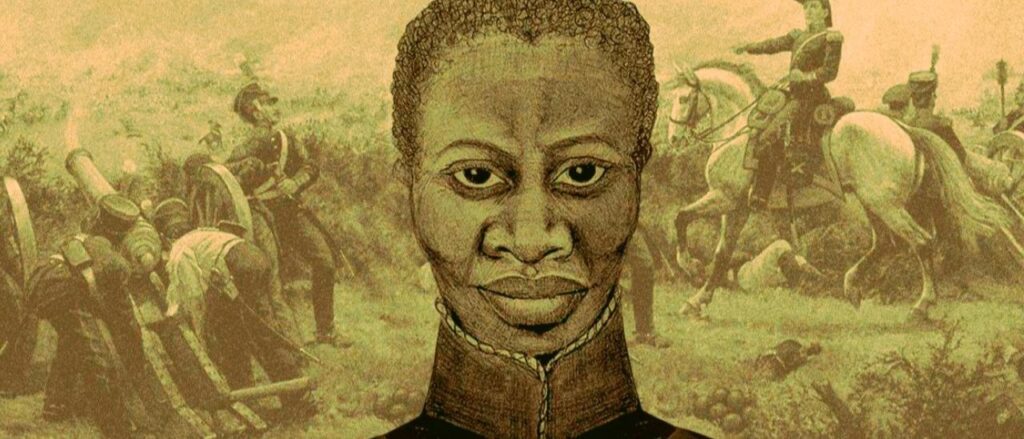
Among the most important protagonists of the wars for independence is Maria Remedios del Valle.
Afro-descendant and born in Buenos Aires, she accompanied the Northern Army during the military campaigns led by Manuel Belgrano.
He participated in different combats and assisted wounded soldiers on the battlefields. His participation, however, was not limited to care tasks.
María Remedios fought directly against the royalist forces and received numerous wounds during the military campaigns.
Her bravery led Belgrano to recognize her as Army Captain.
After the wars of independence, its history took a very different path from that of other protagonists of the period.
For years she lived in conditions of extreme poverty and had to demand recognition from the authorities for the services provided during military campaigns. Her situation began to change when some former comrades-in-arms recognized her on the streets of Buenos Aires and took her case to the authorities. Finally she received a pension and was incorporated back into the Army.
With the passage of time, his figure began to be recovered by researchers, institutions and social organizations.
Currently, each November 8 marks the National Day of Afro-Argentines and Afro Culture in Argentina in tribute to María Remedios del Valle..
His career makes visible not only the participation of women in the independence warsbut also the presence of the Afro-descendant population in the construction of Argentine history.
Juana Azurduy, one of the great military leaders of independence
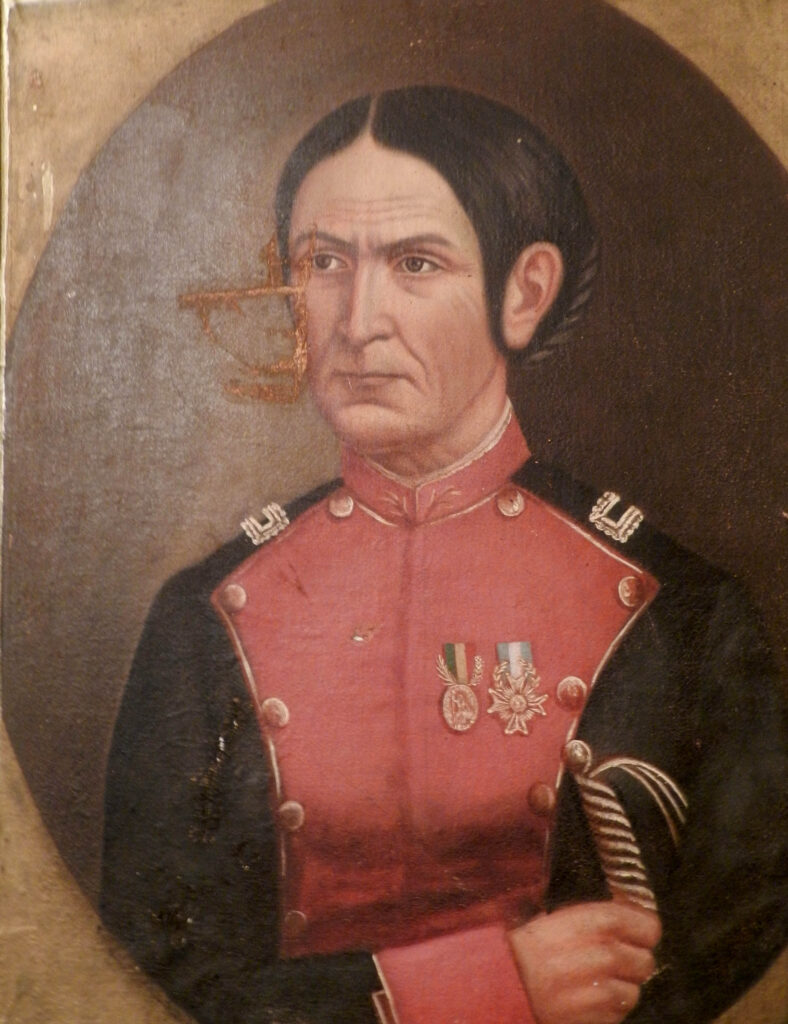
The story of Juana Azurduy She is one of the most recognized among the women who participated in the wars for independence.
Born in 1780 in Chuquisacaa territory that currently belongs to Bolivia, and from a very young age she was linked to the revolutionary movements of Upper Peru. Together with her husband, Manuel Ascencio Padillaorganized military forces to combat the royalist armies.
Azurduy participated directly in numerous battles and came to command troops made up of thousands of combatants.
His knowledge of the territory and his leadership skills were essential to organize the resistance against the Spanish forces.
During the clashes she lost several of her children and also her husband. Despite these losses, she continued to participate in military campaigns.
In recognition of his performance, Manuel Belgrano gave her his saber and she was named lieutenant colonel.However, after the wars he also went through economic difficulties and died in 1862 in conditions of poverty.
Decades later, his figure began to occupy an increasingly important place within official commemorations and historical studies on Latin American independence.
His track record shows that Women not only accompanied the revolutionary armies: they also led troops, designed military strategies and participated directly in the confrontations. that defined the political future of the region.
Macacha Güemes, a fundamental political figure in the Gaucha War
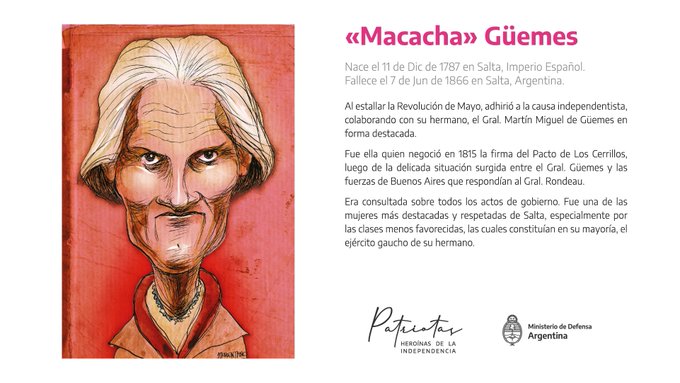
María Magdalena Dámasa Güemes de Tejadapopularly known as Macacha Güemesplayed a fundamental role during the wars for independence in northern Argentina.
Sister of Martin Miguel de Guemesactively participated in the political organization that allowed the resistance against the royalist armies to be sustained.
His house functioned as one of the main political meeting spaces of the time.
Macacha collaborated in the organization of the gaucho militias, established links with different social sectors and acted as a mediator in numerous political conflicts.
One of the most notable episodes of his career was his intervention in the negotiations that allowed the so-called Pact of the Cerrillossigned in 1816.
The agreement allowed the differences between Güemes and the general to be temporarily resolved. Jose Rondeau and strengthen the defense of the northern territory against the royalist advance.
Macacha’s performance shows that Female participation in the independence process also developed in the field of politics.
Their ability to build agreements, organize collaboration networks and participate in strategic decisions was fundamental to sustaining the resistance in the north of the territory.
The women who built a spy network against the royalists
The war for independence was also fought far from the battlefields.
Knowing the enemy’s movements, identifying their positions and transmitting information to the revolutionary armies was essential to organize military strategies.
In Salta, a group of women built an extensive spy network who collaborated with the forces led by Martín Miguel de Güemes.
Among them was María Loreto Sánchez Peón.
Taking advantage of his social ties and his ability to circulate through different areas of the city, he obtained information about the royalist troops.
The data was later sent to the patriot forces.
The members of these networks developed different strategies to avoid being discovered.
They used secret messages, intermediaries and clandestine communication systems which allowed information to be transmitted about the positions and movements of the enemy armies.
The participation of these women was fundamental for the development of the call Gaucha War.
However, for decades their names had a limited presence within traditional accounts of the military campaigns in northern Argentina.
Mariquita Sánchez and the political spaces of the revolution
Female participation in the revolutionary process also had other characteristics.
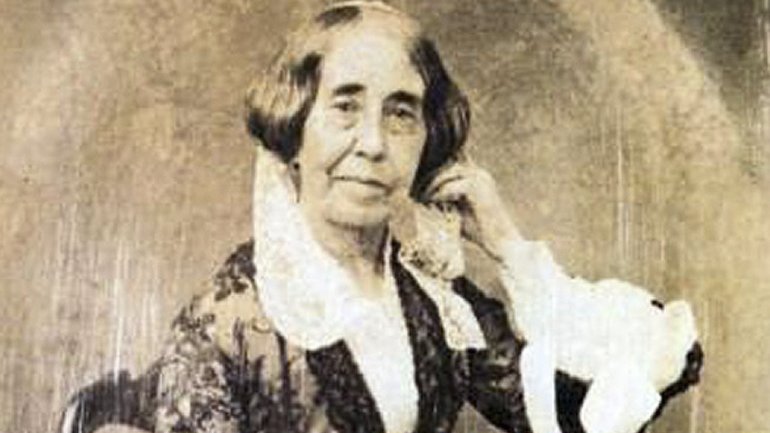
María Josefa Petrona de Todos los Santos Sánchez de Velasco y Trilloknown as Mariquita Sánchez de Thompsonwas one of the most influential women in Buenos Aires society during the first decades of the 19th century.
In his house they performed meetings and gatherings where politicians, soldiers and intellectuals linked to revolutionary ideas participated.
These spaces allowed the exchange of information, discussion of political events and the building of links between some of the protagonists of the revolutionary process.
Traditionally, Mariquita Sánchez was remembered because the song would have been performed for the first time in her house. Patriotic March that later became the Argentine National Anthem.
However, reducing his career to that event means leaving aside his extensive participation in the political, cultural and educational life of the country..
Through his letters and writings he left numerous testimonies about the political events and social transformations that the territory underwent during much of the 19th century.
Her figure allows us to understand that some women found in the private spaces and social networks of the time a way to actively participate in politics, even though they were formally excluded from government institutions.
Fighters, spies, politicians and organizers
The stories of María Remedios del Valle, Ju ana Azurduy, Macacha Güemes, María Loreto Sánchez Peón and Mariquita Sánchez They represent only a part of female participation during the revolutionary process.
Many other women collaborated with financial resources, made uniforms, cared for the wounded, accompanied the armies and participated directly in the fighting.
They were also instrumental in sustaining families, local economies, and communities deeply affected by years of military conflict.
For a long time, these activities were considered secondary to the great military campaigns carried out by the heroes.
The renewal of historical studies allowed us to question that view.
Analyzing independence from a broader perspective implies recognizing that Historical processes are not constructed only by great individual figures.
They are the result of the participation of thousands of people belonging to different social sectors.
Why were women left out of the great stories of history?
The absence of women in traditional narratives of independence was not related to a lack of participation.
During much of the 19th and 20th centuries, political and military history occupied a predominant place within the construction of national narratives.
The main protagonists were presidents, soldiers, governors and political leaders.
The majority were men.
At the same time, Activities traditionally carried out by women were considered part of private or domestic life and received minor attention from historians.
With the advance of the social history and gender studies New questions began to be asked about the past.
Who supported the armies during military campaigns? How was the information circulated? Who cared for the wounded? What role did women have in the political and economic networks of the revolution?
These questions allowed us to recover documents, letters, military files and testimonies that showed a much more complex reality.
The women had been present. What had been missing was a story willing to recognize them as protagonists.
A new look at Argentine Independence
More than two centuries after the Declaration of independencerecovering the stories of the women who participated in the revolutionary process allows us to broaden our view of one of the fundamental events in Argentine history.
It is not simply a matter of adding new names to a list of heroes.
It means understanding that Independence was a collective process carried out by men and women belonging to different social sectors, territories and communities..
They fought, organized armies, transmitted information, participated in politics, economically supported the revolution and faced the consequences of years of war.
Many received late recognition.
Others remained for generations outside of school books and official commemorations.
Each July 9 represents an opportunity to go back over history and ask ourselves who was remembered, who was left out of the story and how the collective memory of a country is built.
Recovering the trajectories of the women of Independence allows us to build a broader view of the past.
A story in which they do not appear only as companions of the great heroes.
But as what they also were: protagonists in the construction of Argentine independence.

