

While local management is still in the consolidation stage, the mayor of La Plata, Julio Alak, began to deploy a political agenda that transcends the limits of the Buenos Aires capital. Meetings with leaders of national importance, contacts with mayors of the interior and public gestures that invite an uncomfortable question: Are you building a candidacy for the province of Buenos Aires?
In recent weeks, Alak held meetings with Miguel Ángel Pichetto, Diego Bossio and Emilio Monzó. As it turned out, the objective was to begin to outline a political front “without exclusions”, a formula that in the current context of fragmentation of Peronism appears more as a necessity than as a slogan.
But the movement is not limited to national figures. There were also gestures towards the Buenos Aires territory. Alak met with the mayor of Ramallo, Mauro Poletti, with whom he agreed on the importance of strengthening joint work between municipalities and sharing management experiences in the face of the difficulties that the communes are going through. A speech that, beyond the technical, begins to build political volume.
We received the mayor of Ramallo, Mauro Poletti, with whom we talked about the difficulties and problems that local administrations are experiencing.
We agree on the importance of strengthening joint work between municipalities, sharing management experiences and building… pic.twitter.com/rQmhJ9r0r6
— Julio Alak (@Julio_Alak) May 6, 2026
He had already started that same path in mid-April with Lucas Ghi, another communal leader of the suburbs, and was completed with the reception in La Plata of the vice-governor of La Rioja, Teresita Leonor. Management federalism or expanded political framework?
The sequence raises several questions. Is this a coordinated strategy to position oneself within Buenos Aires Peronism in a reconfiguration scenario? Or is it simply an overreacted institutional agenda in times where politics demands volume and visibility?
Another question also emerges: if Alak projects, with whom? In a “without exclusions” scheme, could a hybrid formula be thought of that combines management experience with political renewal? Or will the assembly end up conditioned by the internal tensions of Peronism and the gravitation of figures already installed?
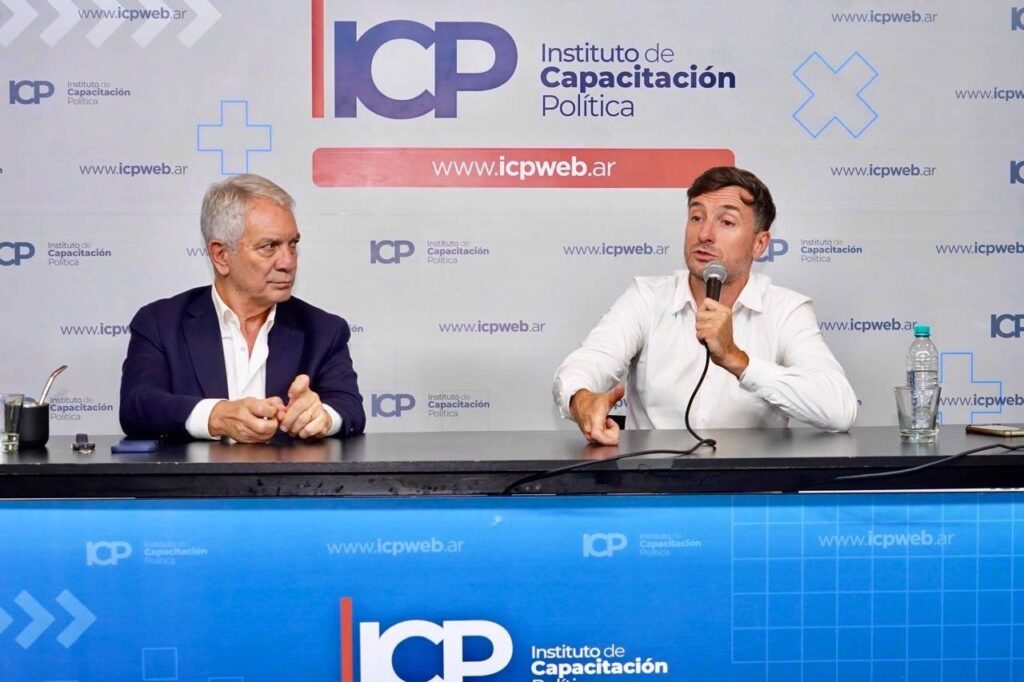
In parallel, the mayor’s movement does not go unnoticed among his peers. Some municipal leaders observe with caution, and a certain distrust, any construction attempt that could alter the delicate territorial balance. Others, however, could see this strategy as an opportunity to reorganize space.
Ultimately, the question remains open: Is Alak managing… or is he already campaigning? In a context of economic crisis and growing social demands, the line between the two seems increasingly blurred. And in politics, gestures are rarely casual.