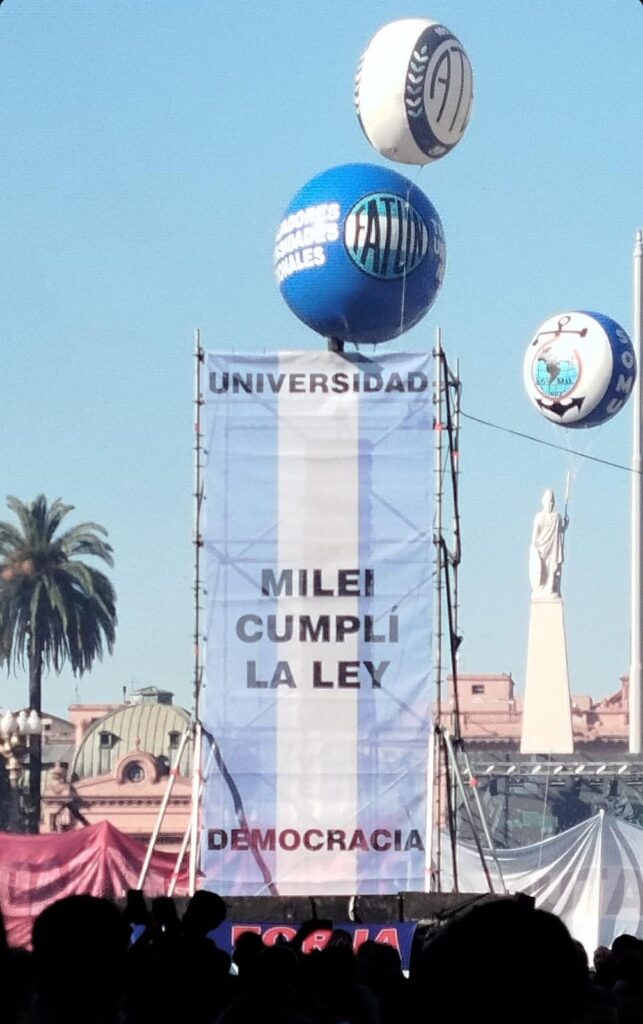

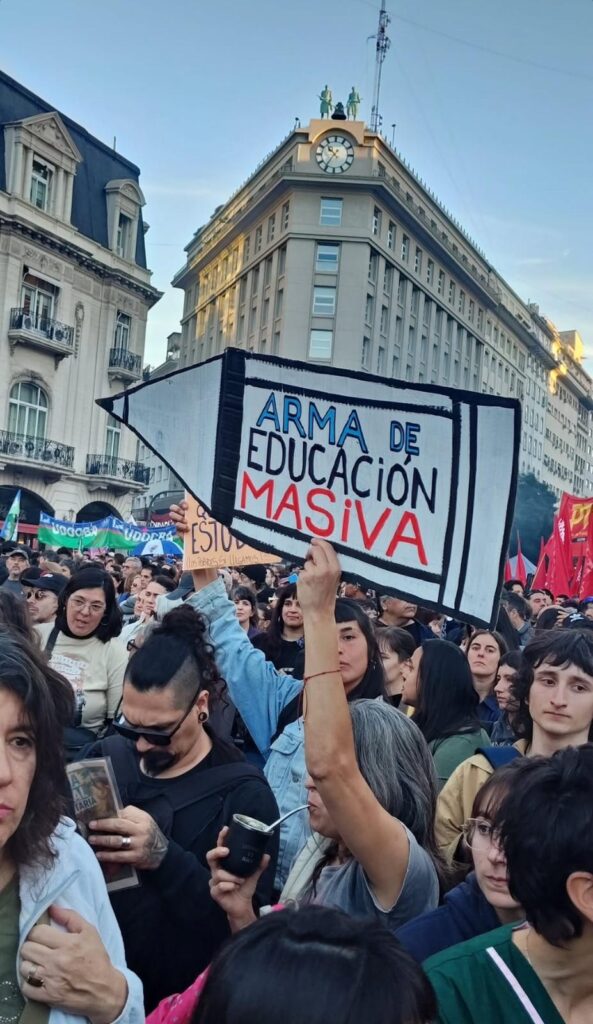
The university community took part this Tuesday in a new edition of the Federal University March, the fourth so far in Javier Milei’s administration, with mobilizations in different parts of the country and a central event in Plaza de Mayo. The protest brought together students, teachers, non-teachers, researchers and academic authorities who demanded from the national government greater financing for public universities and an urgent salary restructuring.
The call was promoted by the National Interuniversity Council (CIN), the Argentine University Federation (FUA) and teaching unions such as the Trade Union Front of National Universities, under the slogan of defending public education, science and university hospitals. Among the main complaints, the effective application of the University Financing Law, approved in 2025, stood out, which according to the universities has not yet been fully implemented by the Executive Branch and has already been in place for more than 200 days.
Let us remember that the march took place after Chamber III of the Federal Administrative Litigation Chamber ordered the state to transfer the funds to the university system, an issue that led to an appeal to the Supreme Court by the government.
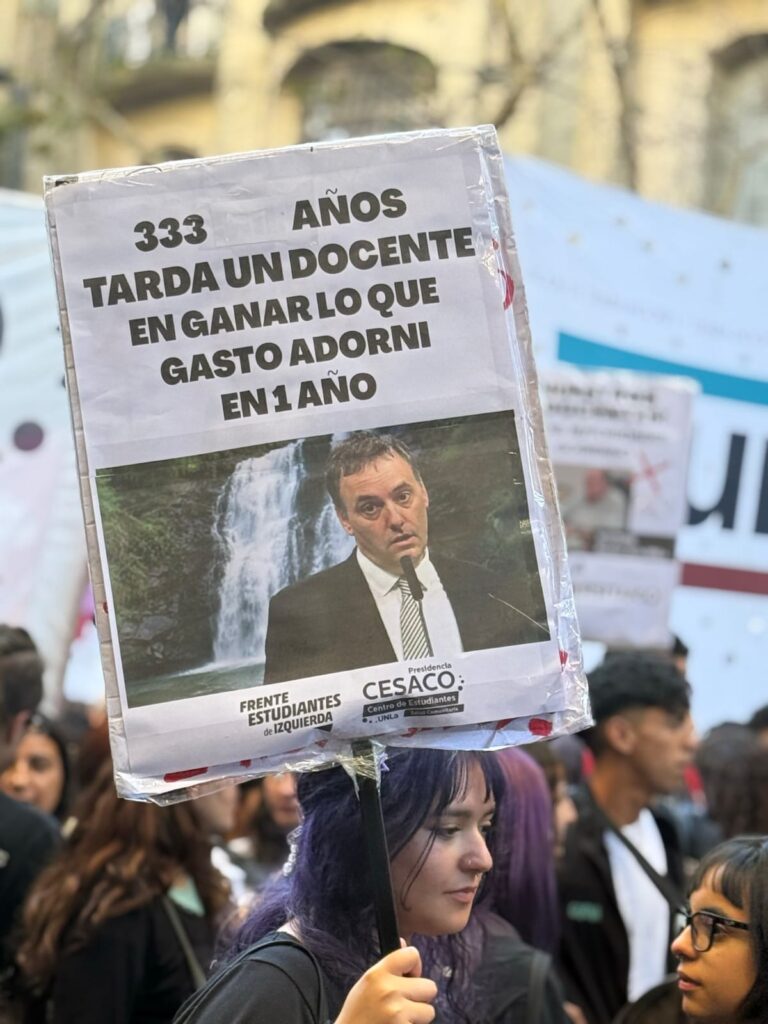
University authorities point out that universities are going through a critical situation as a result of the budget decline and the loss of purchasing power of teachers and non-teaching workers. According to data released within the framework of the mobilization, the university budget went from representing 0.72% of GDP in 2023 to 0.47% currently. In addition, teacher salaries have accumulated a sharp real drop since the end of 2023. Where a full-time teacher with seniority earns 1,532 thousand pesos, just 150 thousand above the basic basket.
To date, it is estimated that around 1,200 teachers and non-teachers have resigned from their positions, causing an exodus to private universities in search of a better salary; Or, many have had to add other extra jobs, which have nothing to do with their profession, to make ends meet.
Another of the central points of the claim is the situation of the university hospitals, which denounce a lack of funds to guarantee operation and medical care. From different academic sectors they warned that the reduction of budget items puts both professional training and the continuity of essential health services at risk.
The national government, meanwhile, rejected the accusations of defunding and maintained that the University Financing Law cannot be applied without previously defining the sources of resources necessary to sustain it. But members of the academic community assured that no law should specify where the funds for its application should come from, since it is the responsibility of the executive branch to take steps to apply it once the law is passed.
The mobilization also had the support of social organizations, political leaders, scientists and cultural leaders. During the day there were public classes, artistic interventions and activities in different faculties to make the university conflict visible.
Among the universities that joined the mobilization, the following stand out:
- University of Buenos Aires
- National University of La Plata
- National University of Córdoba
- National University of Rosario
- National Technological University
- National University of Cuyo
- National Litorial University
- National University of Mar del Plata
- National University of the South
- National University of Tucumán
- National University of San Martin
- National University of Quilmes
- National University of Avellaneda
- National University of General Sarmiento
- University of Lanús