

The La Plata waste recovery system went from recycling almost 10% of the garbage to less than 5% in three years. With the cooperatives’ contract expired and with no signs of renewal, the University decided to get into the conflict. The question is whether the Municipality is willing to listen to it or if it has already made a decision that it does not plan to review.
On Tuesday, the contract that Julio Alak’s management had with the urban reclamation cooperatives expired and there is, for now, no sign that it will be renewed. In the midst of this void, the National University of La Plata decided to step on the board: through its Social Council, and with researchers from Conicet behind it, it presented this week a report to the Municipality that puts into numbers what the cooperatives have been denouncing for some time and that offers something that until now no one had put on the table, a joint work table between the Municipality and the recovery organizations.
The data provided by the document are compelling. In 2022, La Plata recycled 26,630 tons of waste per year, 9% of everything generated in the city. Today that figure fell to 14,454 tons annually, with a recovery rate of 4.89%. In three years, the system collapsed by less than half. Everything that was previously separated and now is not, ends up buried in the Ceamse, with the environmental and economic cost that this implies for the municipal coffers.
The UNLP did not limit itself to diagnosing. He offered to design, together with both parties, environmental, operational and economic indicators to evaluate and strengthen the existing system, and mentioned his own project, developed through CIDEPS, to give new uses to plastics of low commercial value such as bags and films. But she was clear on one point: this development only has a future if the cooperative system is sustained. «This commitment by the University requires not only the maintenance of the Municipality’s recovery system, centered on cooperatives, but also its strengthening,» the document concludes.
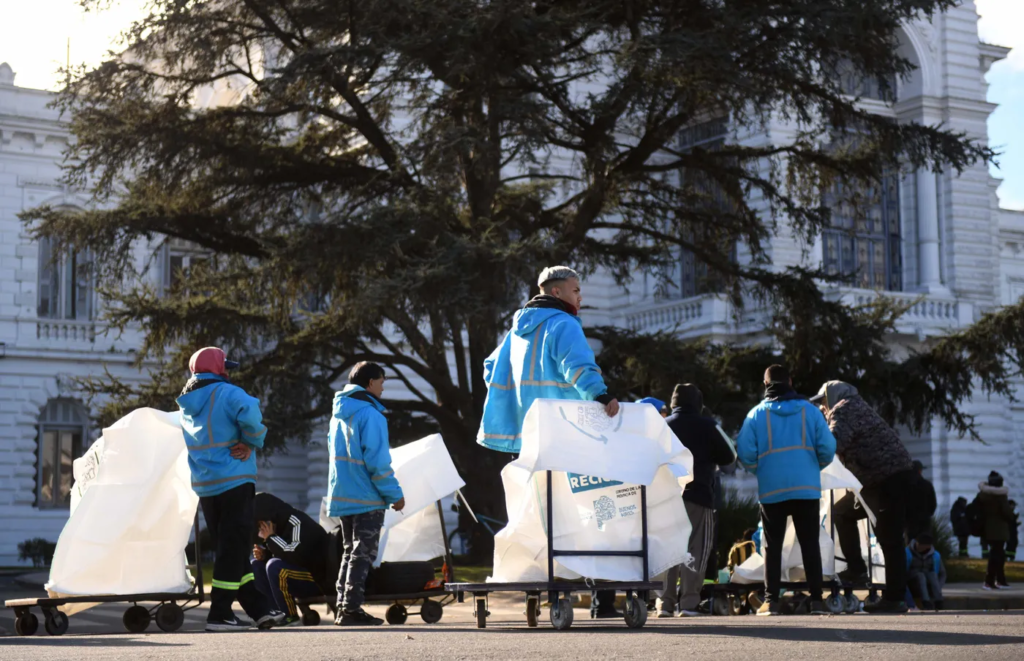
The context in which this report appears is tense. Last week, a protest by cooperative members in front of the Municipal Palace ended with incidents, arrests and damages that the Municipality estimated at more than 43 million pesos. This Wednesday, the organizations returned to the streets with a «flying and traffic light» under the motto «in defense of recycling», with activities at 44 and 143 in the morning and at 44 and 8 and 54 and 12 in the afternoon. The objective, as explained by the Recycling Cooperative, was to dialogue with the neighbors and make visible the situation of some 200 families who were left without work after the end of the contractual link with the Commune.
The official version is different. The Municipality maintains that the departure of the cooperatives is not a political decision but a legal obligation, and that it is moving towards public tenders in compliance with the Organic Law of Municipalities and provisions of the Buenos Aires Court of Accounts. The problem is that the tender document launched for cleaning ditches, cutting grass and sweeping does not include waste recycling. That is to say, even if they wanted to, cooperatives have no way of participating in this process because the service they provide directly is not contemplated. Is it an involuntary gap in the document or an indirect way of closing the door without saying so?
The cooperative members add another element to the claim, that the Municipality had offered them Alimentar Cards as a palliative, something that they consider insufficient and that deepened the discomfort. They demand the reopening of a dialogue table, the same one that the UNLP now offers to mediate. That the mediation proposal comes from an institution with scientific weight and not from a union actor changes the tone of the discussion; a university report is more difficult to discard than a union petition.
What remains, then, is not only an administrative conflict between an expired contract and a Municipality that says it has no legal margin to renew it. It is a definition of environmental policy that the UNLP itself describes as a decline by half in just three years, and it is also the employment continuity of 200 families for whom recycling is not a job but the work from which they live. The ball is on the side of Alak’s management, which now has on its desk a technical argument that is difficult to ignore and a political decision that, until now, has shown no signs of being willing to modify.